
Now Reading: 4G vs. 5G vs. Fiber: Which Internet Is Best for You in Pakistan?
- 01
4G vs. 5G vs. Fiber: Which Internet Is Best for You in Pakistan?

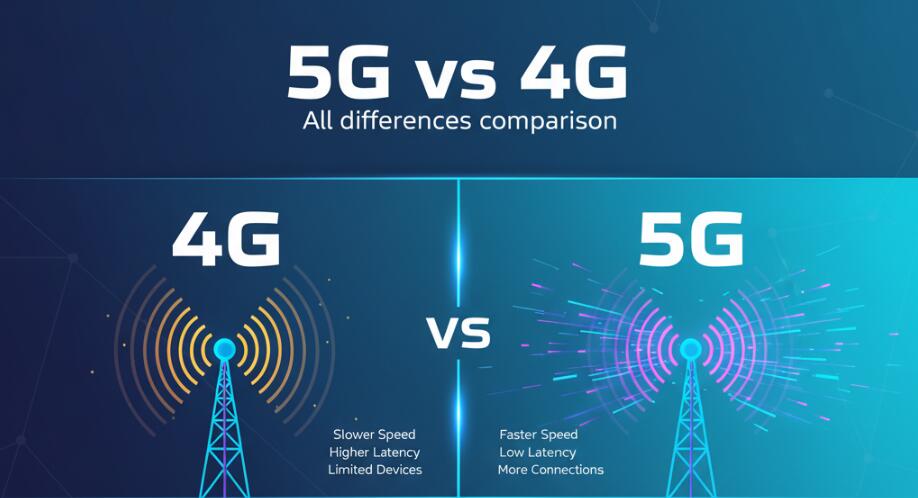
In 2025, we all need good internet. It helps us watch videos, work from home, or chat on social media. But choosing the right one can be hard. In Pakistan, more than 152 million people use the internet, mostly on mobile phones. The main choices are 4G mobile internet, new 5G, and fiber for homes.
This article explains them in simple words. We look at speed, price, and where you can get them—in big cities like Lahore or Karachi, or small villages.
What Is 4G? Why Is It Still Popular?
4G is the mobile internet that most people in Pakistan used since 2014. Think of it like a good bicycle—it’s fast for daily rides but not for racing.
- Speed: You get about 15-20 Mbps for downloading. Zong is the best at 17.3 Mbps. Jazz is close at 16.5 Mbps. This is okay for checking websites, video calls on WhatsApp, or watching Netflix in normal quality. But high-quality video might stop and start when many people use it at the same time.
- Delay (Latency): About 20-30 milliseconds. It feels quick for most things, but online games might slow down a bit.
- Where You Can Get It: Very good in cities (more than 90% coverage). But in villages, it’s not always strong because there are fewer phone towers.
- Price: Very cheap. Data costs around Rs 26.6 per GB. Plans start at Rs 50 for 1GB a day (like Jazz’s daily pack). Or Rs 1,500 for 100GB a month from Zong or Ufone. No extra cost to start—just buy a SIM card.
Good Points: You can take it anywhere (on a phone or small router). Easy to start. Available almost everywhere. Bad Points: Speed slows when busy. Plans have limits on data. Not great for big home use.
If you are a student in a dorm or travel a lot between Islamabad and Peshawar, 4G is perfect for you now.
5G: The Fast Future Coming Soon
5G is the next big thing after 4G. It’s like changing your bicycle to a fast car—much quicker, but not all roads are ready.
- Speed: 10 to 100 times faster than 4G. It can reach 100-1,000 Mbps if everything is good. You can watch super-clear 4K videos without waiting or download a movie in seconds.
- Delay: As low as 1 millisecond. Great for fun games, doctor work from far away, or clear video meetings.
- Where You Can Get It: Not everywhere yet. In November 2025, 5G is not fully open in Pakistan. The government of Pakistan is almost ready to auction the 5G network and is selling space for signals (over 600 MHz). Tests are starting in 7 big cities like Karachi, Lahore, and Rawalpindi. Jazz and Zong are first to try. But full start might wait until 2026 because of some rules. Villages? No chance soon.
- Price: Not fixed yet. Maybe like good 4G plans—Rs 2,000 or more a month for no limit. Plus, you need a 5G phone (Rs 30,000 or higher).
Good Points: Amazing for people who love fast speed, like gamers or video makers. Bad Points: Hard to find now. Phones cost more. Might use more battery.
If you love new tech and live in a big city, wait for 5G tests. But for most, it’s still just talk.
Fiber Optic: The Strong Choice for Home
Fiber internet uses thin glass wires that send data with light. It’s like a wide road right to your house—no weak signals. Pakistan has over 500,000 km of these wires now.
- Speed: The fastest. Up to 1,000 Mbps for downloads. In real life, PTCL’s Flash Fiber gives 100 Mbps with no limit. StormFiber or Multinet give 50-200 Mbps. Good for clear video on many devices or sending big files.
- Delay: Less than 10 milliseconds. Very steady for work or games.
- Where You Can Get It: Growing in cities like Lahore, Karachi, and Islamabad. Over 3.2 million home users. Companies like PTCL, StormFiber, Connect, and Transworld serve 120+ cities. But villages are slow to get it.
- Price: More expensive. Rs 1,500-3,000 a month for 50-100 Mbps with no limit. Setup costs Rs 5,000-10,000. In Pakistan, home internet is one of the priciest in the world at $0.53 per Mbps.
Good Points: Always strong. No data limit. Handles lots of use. Bad Points: Needs workers to install. Can’t take it with you. Costs more in small towns.
For families in flats or offices, fiber is the best.
Quick Compare: See Them Side by Side
Here is a simple table (based on 2025 numbers in Pakistan):
| Thing | 4G Mobile | 5G Mobile | Fiber Optic |
|---|---|---|---|
| Download Speed | 15-20 Mbps | 100-1,000 Mbps (few places) | 50-1,000 Mbps |
| Delay | 20-30 ms | 1 ms | Less than 10 ms |
| Where Available | All over (cities best) | Big cities only (tests) | Cities (growing) |
| Monthly Price | Rs 500-2,000 (data limit) | Rs 2,000+ (guess, no limit) | Rs 1,500-3,000 (no limit) |
| Best For | Travel, low cost | Fast fun in future | Home or office heavy use |
| Problems | Slow in crowds, limits | Not ready everywhere | Install cost, not mobile |
From Opensignal, Speedtest, and company websites.
Moreover, Zong and Jazz are widely used 4G networks in Pakistan. Here you can check out some of the best Zong 4G internet packages as per your requirement.
Which One Fits You?
It depends on your life:
- Home in city with family? Choose fiber—like StormFiber or PTCL for easy videos and work.
- Village or always on road? Use 4G from Zong for basic needs.
- Love tech in big city? Wait for 5G if you want top speed. Or better your 4G now.
- Money is tight? 4G is the winner—cheap and easy.
Tip: Check maps on company apps (like PTA’s). Test speed with Ookla app. Some sea cables broke recently, so steady connection is key.
End: Choose Smart, Stay Online
In Pakistan’s busy online world, 4G helps daily life, 5G brings exciting speed soon, and fiber gives strong home power. No one is perfect for all—pick what fits your place, needs, and money. With 5G coming and more fiber, 2025 is good for better internet. What do you use now?
Tell in comments! Check Jazz, Zong, or PTCL sites for new plans. Stay connected!