Now Reading: Durefishan Saleem Explains Zaryab’s Journey in Dar-e-Nijaat, Says Story Is About Redemption
-
01
Durefishan Saleem Explains Zaryab’s Journey in Dar-e-Nijaat, Says Story Is About Redemption
Durefishan Saleem Explains Zaryab’s Journey in Dar-e-Nijaat, Says Story Is About Redemption

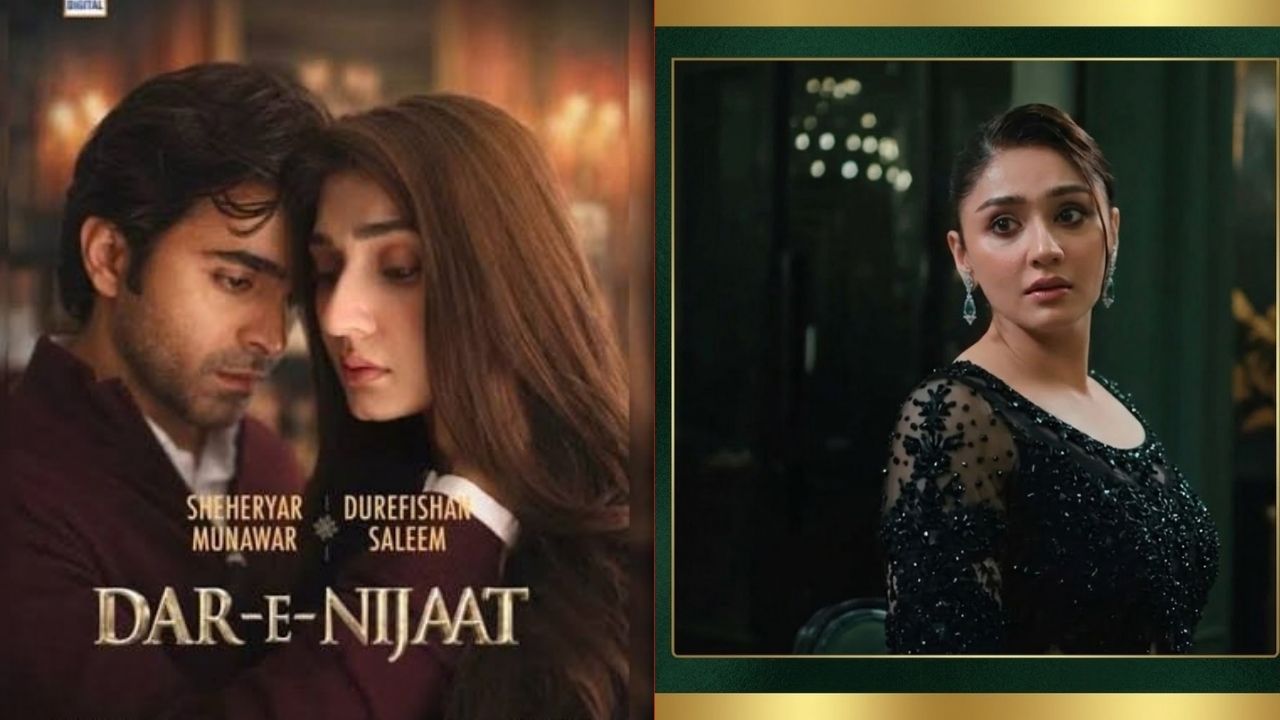
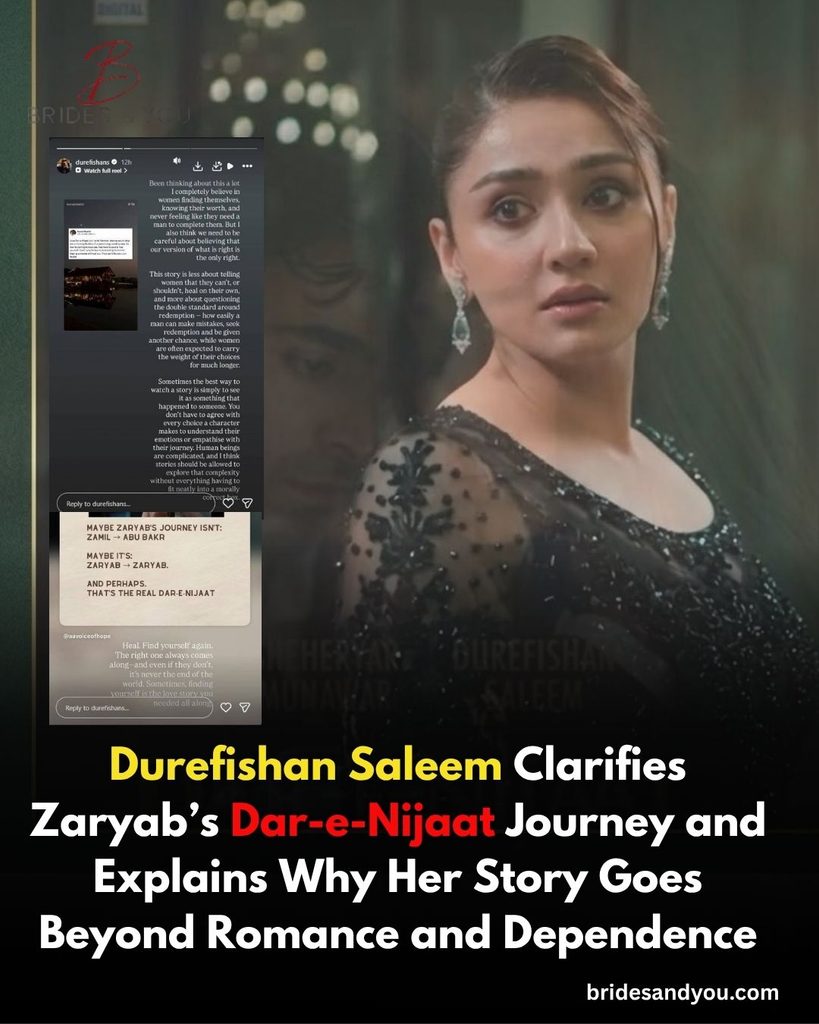
Durefishan Saleem has offered viewers a deeper perspective on Zaryab’s storyline in Dar-e-Nijaat after discussions emerged around the character’s emotional dependence, relationships, and path toward healing.
The Pakistani actress addressed the conversation through a detailed Instagram note, asking audiences to look beyond the idea that Zaryab’s story simply suggests a woman needs a man to overcome emotional pain.
For Durefishan, the drama raises broader questions about forgiveness, accountability, and the different standards applied to men and women when they make mistakes.
A Story About More Than One Relationship
Zaryab’s life in Dar-e-Nijaat changes dramatically after her relationship with her childhood sweetheart, Zamil, portrayed by Nameer Nawaz Khan, ends in heartbreak and betrayal.
Her experiences leave her dealing with emotional distress, guilt and the consequences of choices that continue to affect her life. Later, she marries Abu Bakar, played by Sheheryar Munawar, whose character brings a sense of stability and support into her life.
That progression has prompted some viewers to interpret Zaryab’s story as a movement from one man to another. Durefishan, however, believes the narrative deserves a wider reading.
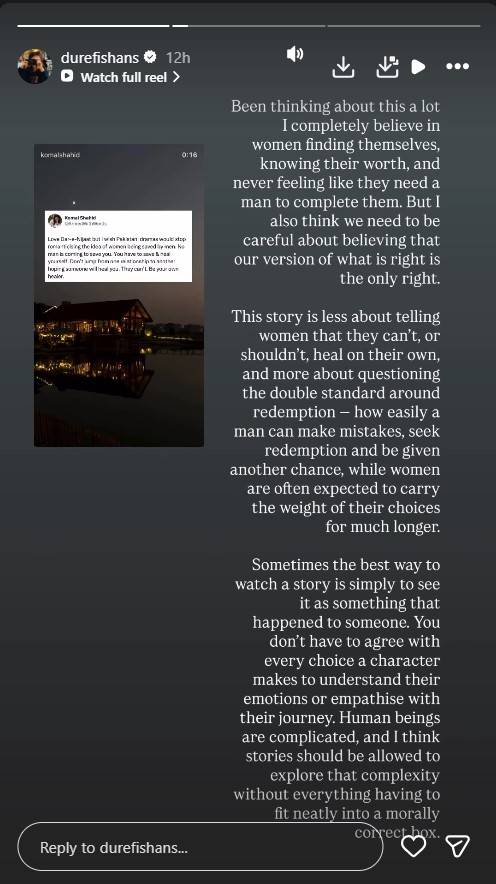
The actress stressed that she believes women should discover themselves, understand their worth and never feel that a man is necessary to make them complete. At the same time, she encouraged audiences to consider perspectives beyond their own understanding of what is right.
Durefishan Highlights the Question of Redemption
According to Durefishan, one of the drama’s central concerns is the difference in how society treats men and women after they make mistakes.
She explained that the story examines how men can sometimes make mistakes, seek forgiveness and receive another opportunity, while women may continue to face judgment for their choices for much longer.
This perspective places Zaryab’s experiences within a larger conversation about forgiveness and second chances rather than presenting her relationship with Abu Bakar as the solution to her emotional struggles.
The actress also encouraged viewers to separate understanding a character from agreeing with every decision that character makes.
Letting Characters Be Complicated
Durefishan’s comments also touch on an important part of watching fictional stories: characters do not always have to behave according to a perfect moral framework.
She suggested that audiences can empathise with a character’s emotions and circumstances without necessarily approving of every choice they make.
For Dar-e-Nijaat, that distinction is particularly relevant because Zaryab’s journey involves love, heartbreak, guilt, social expectations and the possibility of starting again.
Rather than reducing the character to a simple right-or-wrong narrative, Durefishan wants viewers to engage with the emotional circumstances behind her decisions.
Her Message About Healing
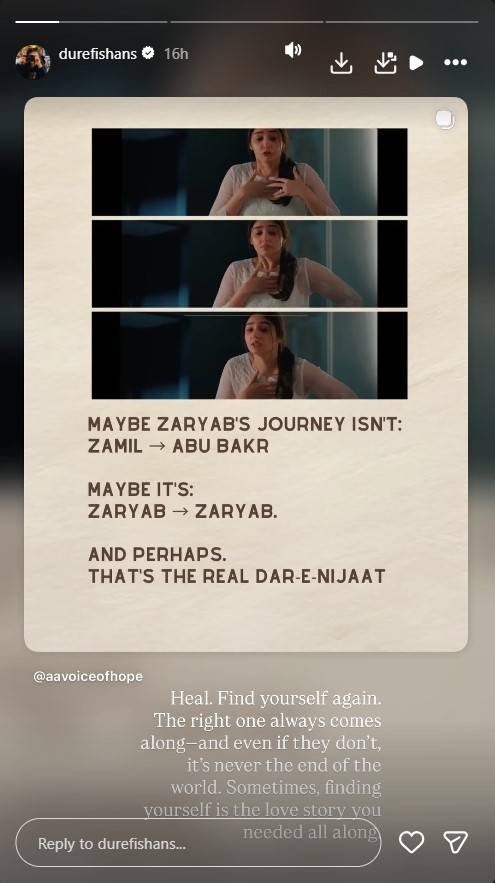
In a separate Instagram Story, Durefishan reinforced the importance of self-discovery and personal healing.
She wrote: “Heal. Find yourself again. The right one always comes along and even if they don’t, it’s never the end of the world. Sometimes, finding yourself is the love story you needed all along.”
The message adds another dimension to her earlier explanation. While Abu Bakar is an important part of Zaryab’s storyline, Durefishan’s comments indicate that the character’s journey should not be understood solely through her romantic relationships.
A Different Way to Read Zaryab’s Story
With her explanation, Durefishan has encouraged Dar-e-Nijaat viewers to consider what lies underneath Zaryab’s relationships and choices.
The actress’s comments frame the drama as an exploration of redemption, forgiveness and social judgment, while also leaving room for audiences to form their own interpretations of the characters.
For Zaryab, the journey is ultimately shaped by more than romance. Her experiences raise questions about how people recover from difficult choices, how society decides who deserves another chance, and whether personal growth can exist alongside complicated human relationships.