
Now Reading: Body Mist vs. Deodorant vs. Perfume: Differences, Benefits, and Usage Tips
-
01
Body Mist vs. Deodorant vs. Perfume: Differences, Benefits, and Usage Tips


Body Mist, Deodorant, and Perfume: Understanding the Differences and Choosing the Right One
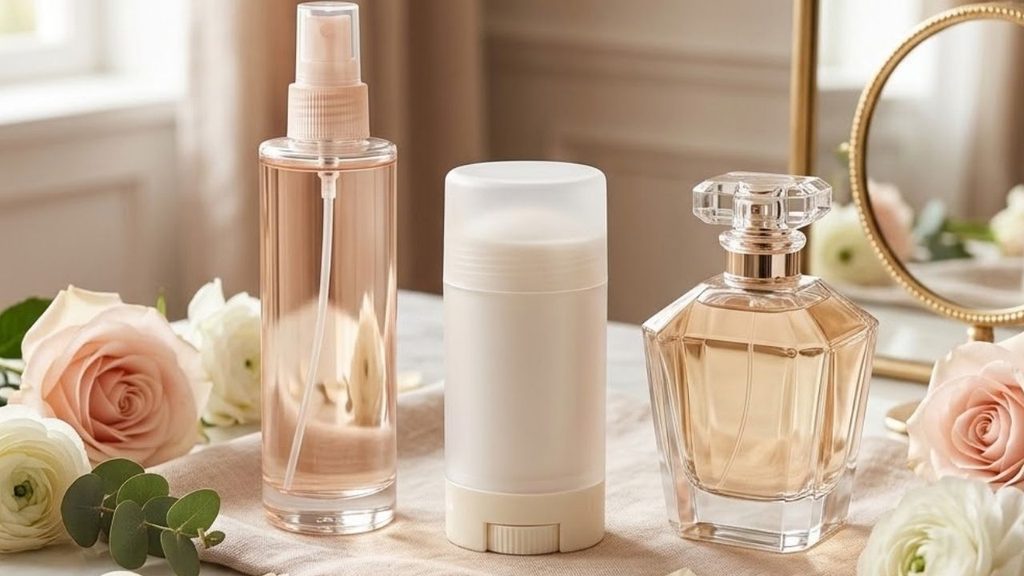
Fragrance is an important part of many people’s daily grooming routines, but not every scented product serves the same purpose. Body mist, deodorant, and perfume may all contribute to a pleasant scent, yet they differ in formulation, fragrance intensity, intended use, and how long their scent typically lasts.
Choosing between them becomes easier when you understand what each product does. While body mist offers a light, refreshing fragrance, deodorant is designed to help manage unpleasant body odor. Perfume, meanwhile, provides a more concentrated scent that can remain noticeable for several hours, depending on its formulation and how it is applied.
Understanding these differences can help you select the right product for everyday wear, work, social gatherings, and special occasions.
Body Mist: A Light and Refreshing Fragrance
Body mist is designed for people who prefer a subtle fragrance without the intensity often associated with concentrated perfumes. It generally contains a lower concentration of fragrance ingredients, making its scent lighter and less pronounced.
Many body mists come in spray bottles and can be applied to the body after a shower or whenever a quick fragrance refresh is needed. Their lighter character makes them suitable for everyday use, particularly when a strong perfume might feel overwhelming.
Another advantage is their versatility. Body mists are available in a wide range of fragrance profiles, including floral, fruity, citrus, fresh and sweet scents. This variety makes it easier to find an option that suits individual preferences.
However, body mist generally fades sooner than a more concentrated perfume. Its longevity varies by formula, skin type, weather and application, so reapplication may be necessary throughout the day.
When should you use body mist?
Body mist is a practical choice for casual outings, daytime activities, university, shopping or moments when you want a light fragrance. It can also be used after showering as part of a personal care routine.
It is important to remember that body mist is primarily a fragrance product. It does not replace deodorant or antiperspirant when the goal is to manage body odour or reduce sweating.
Deodorant: Designed to Help Control Body Odour
Deodorant serves a different purpose from body mist and perfume. Its primary function is to help control unpleasant body odour, particularly around the underarms.
Sweat itself is generally not responsible for the strong smell commonly associated with body odour. The odour develops when bacteria on the skin break down substances present in sweat. Deodorants can help manage this problem through ingredients that target odour or mask it with fragrance.
Deodorants are available in several forms, including sprays, roll-ons, sticks and creams. The most suitable option depends on personal preference, skin sensitivity, and how the product feels during use.
Although many deodorants contain fragrance, their main purpose is not necessarily to provide the same depth or lasting scent as perfume. A deodorant may leave a pleasant smell, but that does not mean it will perform like a dedicated fragrance product.
Deodorant vs Antiperspirant: What Is the Difference?
Deodorant and antiperspirant are often confused, but they perform different functions.
Deodorant helps manage body odor. Antiperspirant is formulated to reduce sweating, commonly through ingredients such as aluminum-based compounds. Some products combine both functions, helping control odour while also reducing perspiration.
This distinction matters when choosing a product. If your main concern is unpleasant body odor, deodorant may meet your needs. If you want to reduce underarm sweating, an antiperspirant or a combination product may be more appropriate.
Always follow the instructions on the packaging, especially when applying products to sensitive or irritated skin.
Perfume: A More Concentrated and Distinctive Scent
Perfume is designed to provide a more developed fragrance than a typical body mist. It generally contains a higher concentration of fragrance ingredients, although the exact concentration varies according to the product category and formulation.
This concentration often allows perfume to remain noticeable for longer, making it a popular choice for workdays, evening outings, weddings, celebrations, and other occasions when a more distinctive scent is preferred.
Perfumes are available in numerous fragrance families, including floral, woody, oriental or amber, citrus, fresh and gourmand. Each category offers a different scent experience, allowing people to choose fragrances that suit their preferences and the occasion.
Some perfumes develop gradually after application. The first impression may feature lighter notes, followed by a more developed heart and deeper base notes as the fragrance settles. How this progression smells and how long it remains noticeable depend on the individual formula.
What Determines How Long Perfume Lasts?
A perfume’s longevity cannot be determined by concentration alone. Several factors influence its performance.
Fragrance concentration: More concentrated formulations often last longer, although this is not a guarantee.
Ingredients and formulation: Different fragrance materials evaporate at different rates, affecting how a scent develops and fades.
Skin type: Fragrance may behave differently on dry and well-moisturised skin.
Weather: Heat and humidity can influence how a fragrance develops and is perceived.
Application: The amount used and where it is applied can affect how noticeable the scent becomes.
For this reason, two perfumes may perform differently even when their labels suggest similar concentrations. Testing a fragrance on your own skin can help you determine whether its scent and longevity meet your expectations.
Body Mist vs Deodorant vs Perfume: The Key Differences
Although these products may share similar scents, they are not interchangeable.
| Feature | Body Mist | Deodorant | Perfume |
|---|---|---|---|
| Primary purpose | Provides a light fragrance | Helps control body odour | Provides a more concentrated fragrance |
| Fragrance intensity | Usually light | Varies; fragrance is often secondary | Usually more pronounced |
| Longevity | Generally shorter-lasting | Odour-control performance varies by formula | Often longer-lasting, depending on formulation |
| Main application | Body | Commonly underarms | Usually selected areas of the body |
| Reduces sweating | No | Only if formulated as an antiperspirant | No |
| Best suited for | Everyday freshness | Daily odour management | Personal fragrance and special occasions |

How to Apply Body Mist, Deodorant and Perfume Correctly
Using each product appropriately can help you get better results from your grooming routine.
- Start with clean skin
Showering and drying your skin before applying fragrance can help you feel fresh. Deodorant should be applied according to its label instructions, generally to clean, dry underarms.
- Apply body mist as needed
Body mist can be sprayed over the body from the distance recommended on the packaging. Avoid spraying near the eyes, face or irritated skin. Reapply when the scent fades, following the product’s instructions.
- Use deodorant for its intended purpose
Apply deodorant to the areas specified by the manufacturer. Do not assume that a scented body mist or perfume can replace it, as these products are not designed to provide the same odour-control function.
- Apply perfume sparingly
A small amount of perfume may be sufficient, particularly if the fragrance is strong. Common application points include the wrists and neck, provided the product is suitable for your skin. Allow the fragrance to dry naturally instead of rubbing the application area.
- Take care when applying fragrance to clothing
Some fragrance products may leave marks or stains on fabric. Check the instructions before spraying perfume or body mist directly onto clothes, and be particularly cautious with delicate or light-colored materials.
- Avoid excessive application
Applying more product does not always produce better results. A strong fragrance can become overwhelming in enclosed spaces, offices, or crowded gatherings. Start with a modest amount and adjust according to the product’s intensity and the setting.
Simple Ways to Help Your Fragrance Last Longer
If you want your favorite fragrance to remain noticeable for longer, a few practical habits may help.
Moisturize your skin: Applying a suitable, fragrance-free moisturizer before perfume can help keep skin hydrated. Fragrance may fade more quickly on dry skin, although the results vary.
Apply fragrance after showering: Clean skin provides a convenient starting point for your fragrance routine. Make sure your skin is dry before applying products unless the instructions specify otherwise.
Choose the right concentration: If longevity is a priority, compare fragrance formulations rather than relying on the product name alone. A more concentrated option may suit your needs, but individual performance still varies.
Store products properly: Keep perfume and body mist away from direct sunlight, excessive heat and frequent temperature changes. Proper storage can help preserve the quality of the fragrance.
Consider the occasion: A light body mist may be sufficient for everyday activities, while a more concentrated perfume may be preferable for an evening event. Choosing a scent appropriate to the setting can also help prevent overapplication.
Reapply when necessary: Body mist may require more frequent application than perfume. Follow the instructions for each product and avoid repeatedly applying fragrance simply because you have become accustomed to its smell.
Can You Use Body Mist, Deodorant, and Perfume Together?
Yes, these products can be used as part of the same routine because they serve different purposes.
For example, deodorant can help manage body odour, while body mist or perfume adds fragrance. If you prefer to layer scents, choose products with complementary fragrance profiles so their combined smell remains pleasant rather than overpowering.
You can also use body mist during the day and reserve perfume for occasions when you want a more noticeable fragrance. There is no need to use every product together; the best routine depends on your preferences and requirements.
People with sensitive skin should pay attention to ingredient lists and avoid products that cause irritation. If a fragrance causes redness, itching or discomfort, discontinue use.
Which Product Is Best for Everyday Use?
The right choice depends on your primary concern.
If you enjoy subtle scents and want something easy to refresh during the day, body mist may be the most suitable option. If managing underarm odour is your priority, choose a deodorant. If you prefer a richer fragrance that may remain noticeable for longer, perfume is worth considering.
For those who want both odour control and a personal fragrance, deodorant and perfume can complement each other. In warmer weather, a lighter fragrance may feel more comfortable, while a stronger scent may suit an evening event. However, personal preference and the fragrance’s formulation matter more than rigid rules about when each product should be worn.
The Bottom Line
Body mist, deodorant and perfume each have a distinct role in personal care. Body mist offers a light fragrance, deodorant helps manage unpleasant body odour, and perfume provides a more concentrated scent that may last longer.
Understanding these differences makes it easier to choose products according to your daily routine, preferred fragrance intensity and occasion. With suitable application and storage, you can enjoy your favourite scents while keeping your personal care routine practical and comfortable.