Now Reading: 75 Questions to Ask Your Partner Before Marriage for a Stronger Relationship
-
01
75 Questions to Ask Your Partner Before Marriage for a Stronger Relationship
75 Questions to Ask Your Partner Before Marriage for a Stronger Relationship

Marriage is a major life decision that brings two people together with different personalities, family backgrounds, beliefs, and expectations. Love is an important part of a relationship, but a successful marriage also needs trust, respect, honest communication, and a shared understanding of the future.
Before getting married, couples often spend months planning their wedding celebrations, choosing outfits, booking venues, and preparing for the big day. However, preparing for married life is just as important as planning the wedding itself.
There are many things couples should discuss before marriage, including finances, careers, children, family responsibilities, household duties, religious beliefs, and personal boundaries. These conversations help partners understand each other and avoid misunderstandings after the wedding.
For couples in Pakistan, these discussions can be especially important because marriage may involve extended families, expectations about living arrangements, financial commitments, and cultural traditions. Whether you are preparing for a love marriage or an arranged marriage, understanding your partner’s expectations can help you make a more informed decision.
According to the Gottman Institute, conversations about money, life goals, communication, and personal values can help couples prepare for married life. The institute also encourages partners to understand each other’s hopes, needs, and expectations before making a long-term commitment.
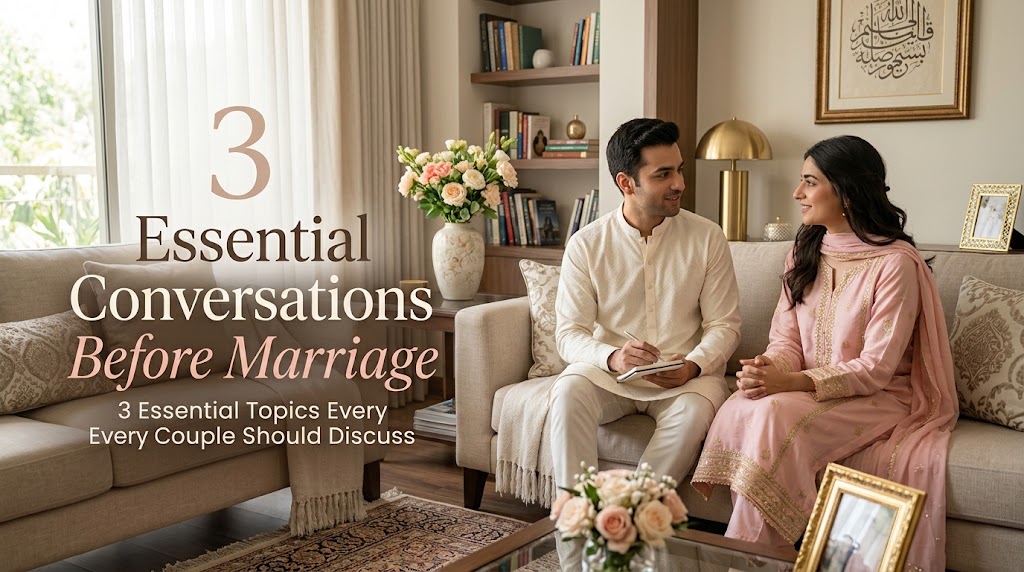
If you are engaged or considering marriage, these 75 questions to ask your partner before marriage can help you explore the most important areas of your relationship. For a helpful starting point, read 3 Essential Topics Every Couple Should Discuss to understand the key conversations to have before marriage.
Why Should Couples Ask Questions Before Marriage?
Every relationship has its own challenges. Two people may love each other but have different ideas about managing money, raising children, pursuing careers, or living with family members.
For example, one partner may want to live independently after marriage, while the other expects to live with their parents. One may want children soon, while the other prefers to focus on education or career goals first.
These differences do not always mean a couple is incompatible. However, avoiding important conversations can lead to disappointment and conflict later.
Discussing expectations before marriage can help couples:
- Understand each other’s values and priorities.
- Build trust through honest communication.
- Identify important differences before making a commitment.
- Develop a shared approach to finances and household responsibilities.
- Discuss family expectations and personal boundaries.
- Prepare for future challenges and major life decisions.
Premarital counselling can also give couples a chance to explore sensitive topics and improve their communication skills. The American Psychological Association has highlighted the value of premarital counselling in helping couples discuss expectations, manage conflict and prepare for married life.

75 Questions to Ask Your Partner Before Marriage
These questions cover emotional needs, family life, financial planning, career ambitions and long-term goals. You do not need to discuss all of them in one sitting. Choose a few topics at a time and give each other enough space to answer honestly.
1. Questions About the Meaning of Marriage
Before discussing practical matters, understand what marriage means to your partner. People often develop their expectations from their family experiences, personal beliefs, and observations of other relationships.
Ask these questions to learn how your partner views commitment.
- What does marriage mean to you?
- What do you expect from a husband or wife?
- What do you believe makes a marriage successful?
- What are your biggest hopes and fears about married life?
- How do you think our relationship will change after marriage?
- What does commitment mean to you during difficult times?
- What makes you feel loved, respected and appreciated?
These questions can help you understand whether you have similar expectations about married life. You may discover that one partner values spending time together, while the other shows love through practical support.
Neither approach is automatically better. What matters is understanding each other’s needs and finding ways to meet them.
2. Questions About Love and Emotional Needs
Love can be expressed in many ways. Some people appreciate affectionate words, while others feel loved when their partner helps them with everyday tasks or makes time for them.
Understanding these differences can strengthen emotional closeness.
- How do you usually express love and affection?
- What makes you feel safe and secure in a relationship?
- How would you like me to support you when you are upset?
- What makes you feel appreciated?
- How much quality time should we spend together?
- Are you comfortable sharing your feelings and insecurities?
- What can I do to support you during stressful times?
Emotional compatibility does not mean that both partners must have the same personality. It means they are willing to understand each other’s feelings and communicate their needs.
A healthy relationship should give both people room to express emotions without feeling embarrassed, ignored or judged.
3. Questions About Communication and Arguments
Disagreements are a normal part of married life. Even couples with strong relationships can have different opinions about money, family responsibilities, careers and everyday decisions.
What matters is how they handle those disagreements.
- How do you usually react when you are angry?
- Do you prefer to discuss problems immediately or take time to calm down?
- What behaviour do you consider unacceptable during an argument?
- How do you prefer to receive an apology?
- Can you admit when you have made a mistake?
- How should we resolve disagreements when neither of us agrees?
- Would you consider counselling if we struggled with a recurring problem?
The Gottman Institute recommends that couples learn to discuss differences respectfully, listen to one another and work toward repairing their connection after disagreements.
Before marriage, pay attention to how your partner responds when you express a different opinion. A disagreement should not involve threats, humiliation or attempts to control the other person.
If either partner needs time to calm down, agree on a way to pause the discussion and return to it later rather than leaving the issue unresolved.
4. Questions About Money and Financial Responsibilities
Money is one of the most important subjects to discuss before marriage. Different spending habits, debts, savings goals and financial responsibilities can become sources of tension if couples do not communicate clearly.
You do not need to have a high income to manage money well as a couple. You need honesty, realistic plans and a shared understanding of financial responsibilities.
- What are your current financial responsibilities?
- Do you have any loans, debts or other financial commitments?
- How do you manage your income and savings?
- How should we manage household expenses after marriage?
- Would you prefer joint bank accounts, separate accounts or both?
- How much financial support do you expect to provide to your family?
- What are your long-term financial goals?
Couples should also discuss how much they want to save, how they will pay for major purchases and what they would do if one partner lost their income.
Financial discussions for couples in Pakistan
In Pakistan, financial planning before marriage may also include wedding expenses, accommodation, gold or other assets, contributions from family members, and ongoing support for parents.
Muslim couples should discuss the agreed mehr (mahr), including its amount and payment terms, and make sure both partners understand their respective rights and responsibilities.
It is also helpful to agree on how financial decisions will be made and how much each person can spend independently.
Financial compatibility is not simply about how much someone earns. Honesty, responsible spending, financial obligations and a willingness to plan together are equally important.
5. Questions About Careers and Personal Goals
Marriage should involve supporting each other’s ambitions rather than making assumptions about what one partner must give up.
Career opportunities, further education, business plans and relocation can affect a couple’s future, so discuss these matters before making a commitment.
- What are your career goals for the next five to ten years?
- Do you plan to pursue further education or start a business?
- How would you feel if my career required travel or relocation?
- Do you expect both partners to work after marriage?
- How should we manage household responsibilities if both of us have demanding jobs?
- What would we do if one partner received a major opportunity in another city or country?
These questions are particularly important when both partners have professional ambitions.
For example, one partner may receive a job offer abroad while the other has an established career at home. Discussing such possibilities can help you understand how you would approach major decisions together.
Women who want to continue their education or careers should discuss these expectations clearly before marriage. The same applies to men who expect their partners to work or contribute financially.
Neither partner should rely on unspoken assumptions about the other’s future.
6. Questions About Children and Family Planning
Having children is a major decision that can affect almost every part of married life. Couples should discuss whether they want children, when they hope to become parents and how they would approach raising a family.
- Do you want children? If so, how many would you ideally like?
- When would you like to start a family?
- How would we approach family planning if our circumstances changed?
- What would we do if we faced difficulties conceiving?
- What values and discipline methods would you want to teach our children?
- How should we divide childcare responsibilities?
- What role should grandparents play in our children’s lives?
These discussions should go beyond deciding the number of children a couple wants.
Talk about childcare, education, parenting styles, work responsibilities and the involvement of extended family members.
It is also important to discuss how you would handle unexpected challenges, including fertility difficulties or changes in your financial circumstances.
Couples may not be able to predict every aspect of parenthood, but they can build a shared understanding of their priorities and responsibilities.
7. Questions About Parents and In-Laws
Marriage often brings two families closer together. In Pakistan, relationships with parents, siblings and extended family members can play a significant role in married life.
Family support can be valuable, but unclear expectations may lead to misunderstandings about privacy, finances and decision-making.
- How involved should our parents be in our daily lives?
- Do you expect us to live with your parents, my parents or independently?
- How should we handle disagreements involving our in-laws?
- What responsibilities should we have toward ageing parents?
- How should we divide our time between both families during Eid and other occasions?
- What boundaries should we establish with relatives?
- How should we respond if a family member disrespects either of us?
These questions can help couples discuss family expectations before they become a source of conflict.
For example, living in a joint family may work well when everyone agrees about privacy, household duties and financial contributions. However, difficulties may arise if one partner expects independent living while the other assumes that living with parents is a permanent arrangement.
Discuss accommodation, family visits, household responsibilities and financial support openly.
Respecting parents and maintaining family relationships does not mean a couple cannot establish reasonable boundaries around their own marriage.
8. Questions About Household Responsibilities
Daily routines can have a major impact on married life. Cooking, cleaning, shopping, laundry and other household tasks require time and effort, especially when both partners work.
Discuss how you expect these responsibilities to be shared.
- How should we divide household chores?
- What are your expectations about cooking, cleaning and laundry?
- How important are cleanliness and organisation to you?
- How should we manage household work when both of us are tired?
- How often do you expect us to host relatives and friends?
- How much personal time do you need for hobbies and relaxation?
Household responsibilities include more than completing chores. They also involve planning meals, remembering appointments, organising family events and keeping track of everyday needs.
A fair arrangement does not always mean dividing every task equally. It means agreeing on a plan that both partners consider reasonable and adjusting it when circumstances change.
Couples should avoid assuming that cooking, cleaning or childcare automatically belongs to one person because of gender.
9. Questions About Religion and Personal Values
Religion, culture and personal beliefs can influence family life, celebrations, daily routines and decisions about raising children.
Even couples from similar backgrounds may have different expectations about religious practices and traditions.
- How important is religion in your daily life?
- Which religious and cultural traditions do you want to maintain after marriage?
- How should we handle differences in religious beliefs or practices?
- What values would you want to teach our future children?
- How should we manage differences between our beliefs and our families’ expectations?
For Muslim couples, these conversations may include prayer, Ramadan, Eid, charitable giving and children’s religious education.
The goal is to understand which beliefs matter most to each person and how they will influence married life.
You do not need to agree on every subject, but you should be able to discuss differences with respect and without pressure.
10. Questions About Physical Intimacy and Boundaries
Physical intimacy can be a sensitive subject, particularly for couples who have not discussed it openly before marriage. However, respectful conversations about affection, comfort and personal boundaries can help build trust.
- What does physical affection mean to you in marriage?
- How comfortable are you discussing intimacy and personal boundaries?
- How should we communicate when either partner feels uncomfortable?
- What helps you feel emotionally and physically close to your partner?
- How should we approach changes in intimacy caused by stress, pregnancy or health concerns?
These conversations should take place without pressure, embarrassment or judgment.
Both partners deserve to have their boundaries respected. Marriage does not remove the need for mutual consent or open communication.
Couples should also understand that physical intimacy can change over time because of health, stress, parenthood and other life circumstances.
If persistent concerns arise, a qualified healthcare professional can provide appropriate guidance.
11. Questions About Trust and Privacy
Trust develops through honesty, respect and consistent behaviour. Before marriage, couples should discuss what loyalty means to them and how they want to manage privacy and independence.
- What does loyalty mean to you in marriage?
- What boundaries should we have around friendships with other people?
- How do you feel about sharing phone passwords and social media accounts?
- How much privacy and independence should each partner have?
- How should we handle jealousy or concerns about trust?
Couples may have different views about phone access, online friendships and social media. One person may prefer sharing passwords, while another may value keeping personal accounts private.
Neither approach should be imposed through fear or pressure. Instead, partners should discuss what makes them feel secure while respecting each other’s independence.
Repeated dishonesty, controlling behaviour, threats or attempts to isolate a partner should not be dismissed as ordinary relationship disagreements.
12. Questions About Health and Personal History
Health, personal experiences and major life circumstances can influence a couple’s future plans. These subjects should be approached with honesty, sensitivity and respect for privacy.
- Are there any significant health concerns or ongoing medical needs we should discuss?
- Is there anything about your personal history that would help me understand or support you better?
- How do you usually cope with stress, grief or difficult experiences?
- Would you be willing to seek professional support if either of us faced a serious personal challenge?
Partners do not need to share every private detail of their past. However, information that could materially affect shared decisions, health, safety or future responsibilities should not be deliberately concealed.
Give each other time to discuss sensitive issues without demanding immediate answers. Health concerns should be handled without stigma, and medical advice should come from qualified professionals.
13. Questions About Future Plans and Long-Term Goals
Marriage involves planning not only for the first year but also for the life you hope to build together.
Your priorities may change as you grow older, develop new interests or face unexpected circumstances. Discussing your future can help you understand whether your ambitions fit together.
- Where would you ideally like us to live in the next five to ten years?
- What kind of life do you want us to build together, and what does a happy marriage look like to you?
You can explore these questions further by discussing home ownership, travel, retirement, business plans, lifestyle choices and how you would respond to major setbacks.
A shared future does not require identical dreams in every detail. It requires a willingness to make plans together, revisit decisions and support one another as circumstances change.
How to Ask Your Partner These Questions Without Making Things Awkward
Asking important questions before marriage should not feel like an interview. The aim is to understand each other, not to test your partner or force them to agree with you.
The Gottman Institute recommends asking meaningful questions, listening carefully and approaching differences with curiosity. These habits can help couples develop a deeper understanding of each other’s needs and expectations.
Choose the Right Time
Discuss important subjects when both of you are relaxed and have enough time to talk. Avoid starting a sensitive conversation during an argument or when either person is tired or stressed.
Answer the Questions Yourself
The conversation should work both ways. If you ask your partner about finances, family responsibilities or career goals, be prepared to explain your own expectations as well.
Listen Without Judging
Your partner may have different opinions because of their upbringing or personal experiences. Try to understand their reasoning before deciding how you feel about their answer.
Discuss Solutions Instead of Demanding Agreement
If you disagree about living arrangements, for example, discuss the reasons behind each preference and consider realistic alternatives.
The goal is not to win the conversation. It is to discover whether you can make decisions together.
Give Difficult Topics Enough Time
You do not need to discuss all 75 questions in one day. Choose one or two subjects for each conversation and return to difficult topics when you have both had time to think.
What Are the Warning Signs to Look for Before Marriage?
Your partner’s answers matter, but their behaviour during difficult conversations can also reveal important information about the relationship.
Positive signs include:
- Honesty: They answer important questions sincerely.
- Respect: They listen even when they disagree.
- Accountability: They can admit mistakes and take responsibility.
- Flexibility: They are willing to discuss practical solutions.
- Consistency: Their actions generally match their promises.
- Healthy communication: They can discuss difficult subjects without insults, threats or intimidation.
By contrast, repeated dishonesty, controlling behaviour, extreme jealousy, financial deception or pressure to abandon important personal goals deserve serious attention.
One uncomfortable conversation does not automatically mean a relationship is unhealthy. People may feel nervous or need time to process difficult information.
However, if you are afraid to disagree, feel pressured into marriage or experience threats or coercion, take those concerns seriously. Marriage should not be treated as a way to fix abusive or controlling behaviour.
What If You and Your Partner Disagree?
Different answers do not always mean two people are incompatible. Many couples have different preferences about routines, hobbies, social activities and other everyday matters.
The more important question is whether you can manage those differences while respecting each other’s needs.
Start by asking:
- Why is this issue important to each of us?
- Is it something we can reasonably compromise on?
- Is there a solution that respects both partners?
- Are we both willing to make adjustments?
- Do we need more information or professional guidance before deciding?
Some issues require particular attention. Decisions about having children, career expectations, financial responsibilities and living arrangements can have a lasting effect on married life.
If you cannot reach an understanding about an important issue, consider premarital counselling. A qualified counsellor can help you communicate more effectively and explore whether your expectations can be reconciled. Counselling can support preparation, but it cannot guarantee that a marriage will succeed.
Frequently Asked Questions
What are the most important questions to ask before marriage?
The most important questions concern commitment, finances, children, family expectations, careers, communication, intimacy, trust and future plans. Focus first on issues that could significantly affect your married life.
What questions should you ask in an arranged marriage?
Discuss living arrangements, financial responsibilities, career plans, children, family involvement, religious beliefs, privacy and personal boundaries. Both people should have enough time and freedom to ask questions and make an informed decision.
Should couples discuss money before marriage?
Yes. Discuss income, debts, savings, spending habits, family support and financial goals. These conversations can help you create a realistic household budget and avoid misunderstandings.
When should couples start discussing marriage expectations?
Ideally, begin these conversations well before the wedding. Starting early gives both partners time to consider their answers, discuss differences and make important decisions without unnecessary pressure.
Is it normal to feel uncomfortable asking personal questions?
Yes. Topics such as money, health, intimacy and family responsibilities can feel sensitive. Introduce them respectfully, listen carefully and allow each person time to respond.
Is love enough for a successful marriage?
Love is important, but a healthy marriage also requires trust, respect, communication and a willingness to work through difficulties. Couples do not have to agree on everything, but they should be able to discuss important differences honestly.
Is premarital counselling helpful?
Premarital counselling can help couples explore expectations, strengthen communication and prepare for common challenges. It can be especially useful when partners have unresolved disagreements about major life decisions.
Final Thoughts
Asking questions before marriage is not about finding a perfect partner. It is about understanding the person you are choosing to share your life with.
Love can bring two people together, but a lasting relationship also depends on respect, trust, honest communication and a willingness to face challenges as a team.
Whether you are preparing for a love marriage or an arranged marriage, take time to discuss your expectations about money, family, children, careers, personal boundaries and the future. Listen carefully to your partner’s answers and be equally honest about your own needs.
Most importantly, pay attention to how your partner treats you, responds to disagreement and respects your choices. Promises matter, but consistent behaviour matters too.
The right conversations before marriage can help you make a more informed decision and build a stronger foundation for your future together.