Now Reading: Choosing Bridal Fabrics: Ultimate Guide to Finding the Perfect Wedding Dress Material
-
01
Choosing Bridal Fabrics: Ultimate Guide to Finding the Perfect Wedding Dress Material
Choosing Bridal Fabrics: Ultimate Guide to Finding the Perfect Wedding Dress Material

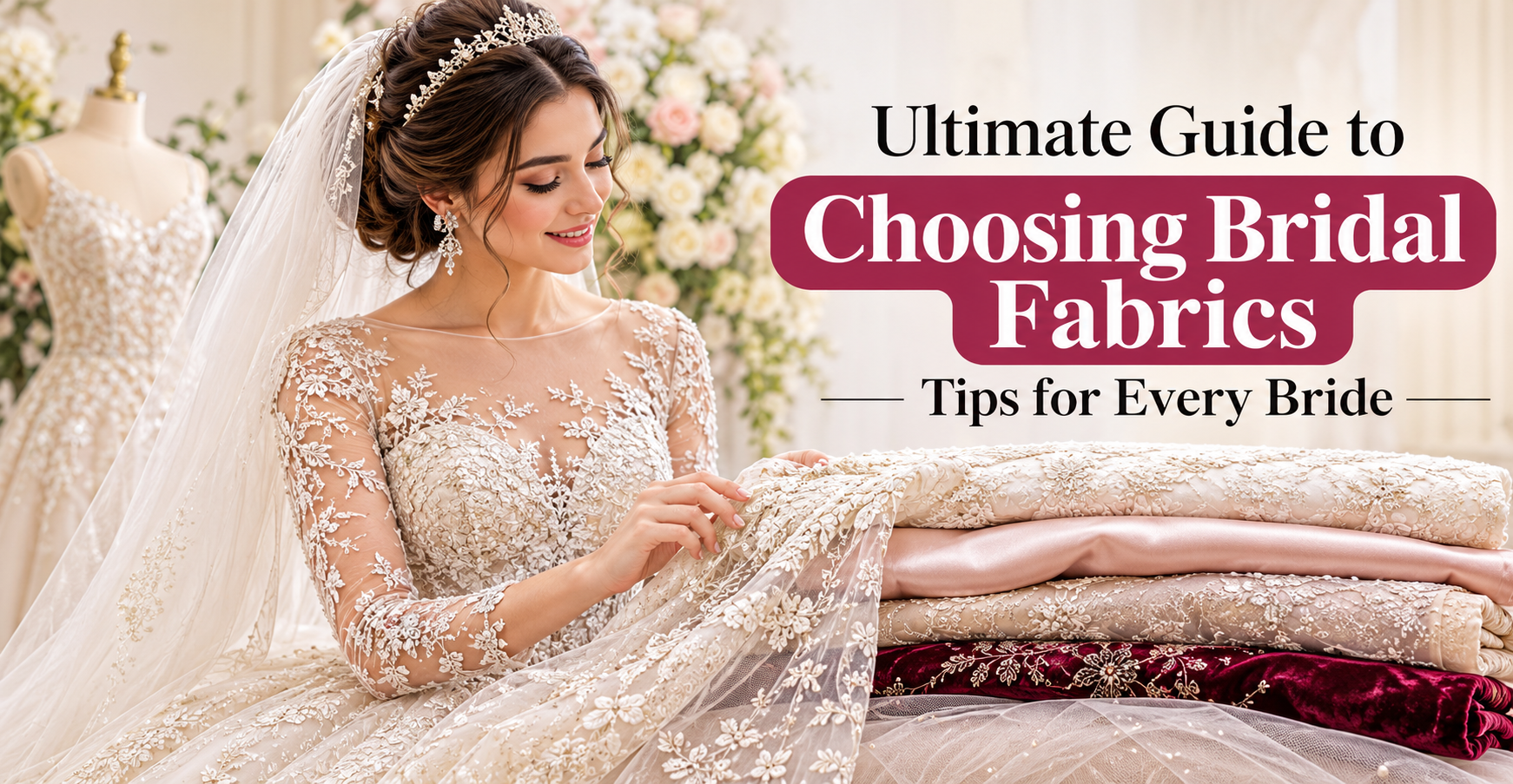
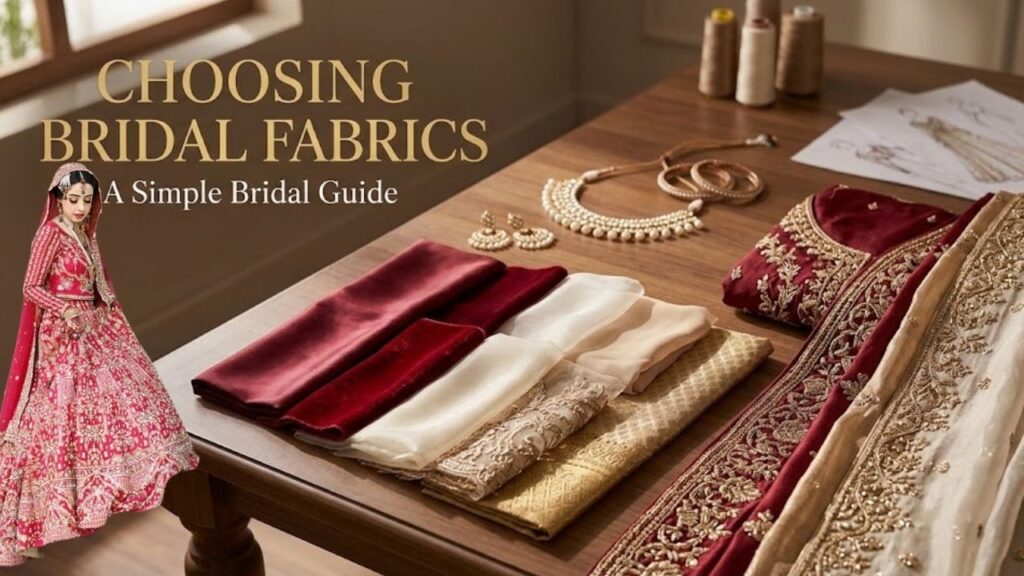
A beautiful bridal outfit is about more than its color, embroidery, or design. The fabric plays an equally important role in determining how the dress looks, feels, and moves. From luxurious silk and elegant satin to delicate lace, flowing chiffon, and lightweight organza, every material brings a different character to a wedding outfit. Understanding the basics of choosing bridal fabrics can help every bride make a confident decision and find a material that matches her personal style, wedding theme, and comfort requirements.
Whether you are planning a traditional wedding, a modern ceremony, or a destination celebration, selecting the right fabric requires careful consideration. The season, venue, outfit silhouette, embroidery, budget, and personal preferences can all influence your decision.
Some materials create structured and dramatic silhouettes, while others offer soft movement and a romantic appearance. The ideal choice should complement your wedding dress design without compromising comfort or practicality.
If you are preparing for your wedding and wondering which material will work best, this comprehensive guide explains the most popular bridal fabrics, their characteristics, seasonal suitability, styling possibilities, and essential buying considerations.
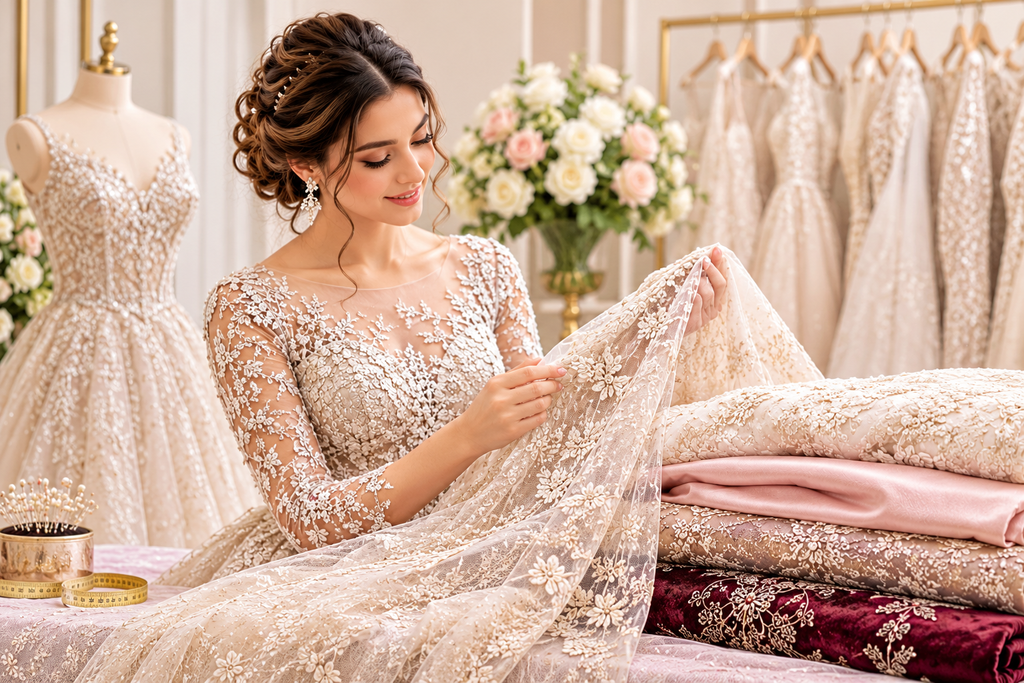
Why Is Choosing the Right Bridal Fabric Important?
Fabric is the foundation of any bridal outfit. It influences the overall silhouette, the way the garment falls, and how comfortable it feels throughout the wedding celebrations.
For example, a structured fabric can create a dramatic princess-style gown, while a lightweight material gives an outfit a softer and more flowing appearance. Similarly, a heavily textured material can enhance traditional embroidery, whereas a smooth fabric may be better suited to a minimalist bridal design.
The right material also affects several practical aspects:
- Comfort: Fabric weight, fibre composition, and lining influence how comfortable the outfit feels.
- Appearance: Different materials reflect light differently, affecting the overall finish.
- Silhouette: Some fabrics hold their shape, while others naturally follow the body’s movement.
- Embroidery: Certain materials provide better support for heavy embellishments.
- Durability: Fabric quality and construction influence how well the outfit withstands use and storage.
- Budget: Natural fibres, designer textiles, and heavily embellished materials can increase the overall cost.
Understanding these differences before visiting a bridal boutique or approaching a designer can make the selection process much easier.
Understanding Different Bridal Fabrics
There are numerous materials available for wedding dresses and traditional bridal outfits. Each fabric has distinctive qualities, and understanding them can help you identify the best option for your preferred design.
1. Silk: A Timeless Choice for Elegant Brides
Silk has remained a popular choice in bridal fashion because of its natural lustre, smooth texture, and luxurious appearance. It drapes beautifully and can be used for different wedding outfit designs, including flowing gowns, traditional lehengas, sarees, and elegant dupattas.
Popular silk varieties include:
- Silk satin: Offers a smooth surface with a beautiful sheen.
- Silk organza: Provides a lightweight yet structured finish.
- Silk chiffon: Creates soft, flowing layers.
- Raw silk: Features a slightly textured appearance and works well for structured outfits.
- Silk dupioni: Has distinctive natural irregularities that create an interesting textured finish.
Silk is suitable for brides who appreciate traditional craftsmanship and refined elegance. However, genuine silk can be expensive and may require specialist cleaning.
2. Satin: Perfect for a Glamorous Bridal Look
Satin is associated with smooth surfaces and a noticeable sheen, making it a favourite for sophisticated bridal designs.
It is commonly used for fitted wedding gowns, ball gowns, corset-style bodices, and formal bridal dresses.
One important detail is that satin describes a weave rather than a specific fibre. It can be made from silk, polyester, or other fibres, so its quality, weight, and price can vary considerably.
Why brides choose satin:
- Its smooth finish creates a polished appearance.
- Heavier varieties can support structured designs.
- It works beautifully with minimalist and classic silhouettes.
- It gives formal wedding outfits a luxurious finish.
However, satin can show creases, fingerprints, and certain fabric marks. Heavier varieties may also feel warm during summer celebrations.
3. Chiffon: Lightweight and Romantic
Chiffon is a lightweight, sheer fabric known for its soft drape and delicate appearance.
It is particularly suitable for brides who prefer flowing dresses rather than heavily structured designs.
Chiffon is often used in:
- Layered bridal skirts
- Flowing sleeves
- Dupattas and veils
- Lightweight overlays
- Destination wedding outfits
Its airy appearance makes it an attractive choice for outdoor and warm-weather celebrations.
However, chiffon can snag easily and may wrinkle. It is also relatively delicate, so proper handling and suitable lining are important.
4. Lace: Romantic Details and Delicate Beauty
Lace adds texture, detail, and elegance to bridal clothing. It is available in numerous patterns, from delicate floral designs to bold decorative motifs.
Some popular varieties include Chantilly lace, Alençon lace, guipure lace, and embroidered lace.
Lace can be used throughout a wedding dress or incorporated into selected areas, including:
- Sleeves and necklines
- Bodice detailing
- Bridal veils
- Skirt overlays
- Decorative borders
For traditional bridal outfits, lace can also complement intricate embroidery and embellishment.
When choosing lace, pay attention to its softness, pattern quality, and how well it complements the base fabric. Delicate lace may require careful stitching and professional alterations.
5. Organza: For Structured and Voluminous Designs
Organza is a lightweight, sheer fabric with a crisp texture. Unlike chiffon, which falls softly, organza has more structure and can hold its shape.
This makes it particularly useful for brides who want volume without relying entirely on heavy materials.
It is commonly used for full bridal skirts, dramatic sleeves, layered gowns, decorative overlays, and statement dupattas.
Organza works beautifully in both traditional and contemporary bridal fashion. One consideration is that it can develop noticeable creases and may feel slightly stiff against the skin, depending on its construction and quality.
6. Tulle: A Favourite for Dreamy Bridal Dresses
Tulle is a fine net-like material often used to create volume and softness in bridal outfits.
It is particularly popular for ball gowns, princess-style dresses, veils, and layered skirts.
Soft tulle creates a delicate, flowing effect, while stiffer varieties provide more structure. Brides can also choose embellished tulle featuring sequins, pearls, embroidery, or floral details.
Although tulle is lightweight, multiple layers can add considerable volume. It can also snag or tear if caught on jewellery, sharp accessories, or rough surfaces.
7. Crepe: Modern and Minimalist Bridal Fashion
Crepe is an excellent option for brides who prefer understated elegance.
It generally has a matte or subtly textured surface and is available in different weights and fibre compositions.
Its drape makes it suitable for fitted gowns, sheath dresses, and contemporary bridal designs.
Its main advantages include:
- A clean and sophisticated appearance.
- Beautiful draping for streamlined silhouettes.
- Less shine than traditional satin.
- Versatility for minimalist and modern designs.
However, lighter crepe may reveal the lines of undergarments, making proper fitting and suitable lining important.
8. Velvet: Rich and Luxurious for Winter Weddings
Velvet is known for its soft pile, rich texture, and luxurious appearance.
It is especially popular for winter weddings and formal evening celebrations.
In South Asian bridal fashion, velvet is frequently used for richly embellished lehengas, jackets, shawls, and traditional wedding outfits.
Its heavier construction gives garments a substantial appearance, while embroidery and decorative detailing can make the material even more striking.
However, velvet is generally less suitable for extremely hot weather. It can also require specialist cleaning and careful storage to protect its pile.
9. Georgette: Soft Movement and Versatile Styling
Georgette is a lightweight to medium-weight fabric with a slightly textured surface and a graceful drape.
It is popular for brides who want movement without choosing an extremely sheer material.
Georgette works well for sarees, flowing lehengas, gowns, dupattas, and layered bridal outfits.
Compared with chiffon, it generally has a little more body, making it useful for designs that require softness with some additional coverage.
However, its transparency and weight vary according to construction, so check the material before purchasing.
10. Brocade: Traditional Beauty and Rich Texture
Brocade is a decorative fabric featuring woven patterns, often with raised or contrasting designs. It is particularly popular in traditional bridal fashion.
It can create a regal appearance in lehengas, jackets, blouses, sarees, and formal wedding dresses.
Brocade is often selected for its intricate patterns and ability to create visual interest without requiring embroidery across every section of the outfit.
However, some brocade varieties are heavy and less flexible. Brides should consider the garment’s weight and lining before choosing this material.
Choosing Fabrics by Season
The wedding season should play an important role in selecting your bridal outfit. Temperature, humidity, venue, and the duration of the celebrations can all influence how comfortable a particular material feels.
Summer Weddings
For summer celebrations, lightweight fabrics are generally preferable because they allow easier movement and can reduce the feeling of heaviness.
Consider:
- Chiffon for flowing gowns and dupattas.
- Georgette for comfortable, graceful draping.
- Lightweight silk for elegant traditional outfits.
- Fine organza for structured yet relatively lightweight designs.
- Light lace for delicate decorative details.
Avoid excessive layering and unnecessarily heavy embellishments, particularly for outdoor ceremonies.
Winter Weddings
Winter celebrations provide more flexibility when choosing heavier fabrics and layered designs.
Popular options include:
- Velvet for luxurious traditional bridal outfits.
- Heavy silk for elegant wedding dresses.
- Brocade for richly textured designs.
- Duchess satin for structured gowns.
- Embroidered fabrics for elaborate bridal looks.
These materials can create a rich appearance while providing additional coverage.
Spring and Autumn Weddings
Spring and autumn offer opportunities to experiment with medium-weight fabrics and mixed textures.
Silk, satin, organza, and lace combinations can work beautifully during these seasons. Brides can also incorporate lightweight embroidered overlays to create a balanced look.
Indoor and Outdoor Wedding Considerations
The wedding venue matters just as much as the season.
An outdoor garden ceremony may involve walking on grass, exposure to wind, and changing temperatures. A long, delicate train or fabric that catches easily may require additional attention.
Indoor ballroom weddings offer greater flexibility for structured gowns, heavier materials, and elaborate designs.
For destination weddings, consider how easily the fabric travels, whether it wrinkles during packing, and whether suitable cleaning or steaming services will be available.
Comfort and Fit Considerations
A beautiful bridal outfit should also feel comfortable. Since wedding celebrations often involve several hours of movement, sitting, standing, greeting guests, and photography, fabric selection should never be based on appearance alone.
The material should complement your measurements and allow you to move naturally.
Fabric Weight
Heavy materials can create beautiful silhouettes but may become uncomfortable during extended celebrations. Choose a weight that suits your outfit design and physical comfort.
Remember that embroidery, lining, and multiple layers can increase the overall weight.
Breathability
Fabrics with suitable fibre compositions and lighter construction can help improve comfort, particularly in warm weather.
Natural fibres are not automatically comfortable in every construction, and synthetic fabrics are not always uncomfortable. The complete garment, including lining and layers, determines much of the wearing experience.
Stretch and Movement
Some materials provide more flexibility than others. If you prefer a fitted wedding dress, discuss the need for stretch panels or a suitable fabric blend with your designer.
For traditional outfits, make sure the waistband, sleeves, and bodice allow enough movement for sitting and walking.
Lining and Skin Sensitivity
Rough embroidery, stiff netting, and poorly finished seams can irritate the skin.
Soft lining and carefully finished interiors can make a noticeable difference. Brides with sensitive skin should test the material before committing to the complete outfit.
Proper Measurements and Fittings
Even premium fabric cannot compensate for poor tailoring.
Schedule fittings to ensure the outfit sits correctly at the shoulders, waist, bust, and hips.
Before finalising your bridal dress, try sitting, walking, raising your arms, and moving around in a sample or fitting version. This will help identify potential comfort issues before the wedding.
Matching Bridal Fabrics with Different Wedding Outfit Styles
The right material should support the silhouette you want to achieve.
Here are some useful combinations to discuss with your designer:
| Bridal outfit style | Suitable fabric choices |
|---|---|
| Princess-style gown | Satin, organza, tulle |
| Mermaid gown | Crepe, satin, structured silk |
| A-line wedding dress | Mikado, chiffon, lace |
| Traditional bridal lehenga | Raw silk, velvet, brocade |
| Flowing bridal saree | Silk, chiffon, georgette |
| Sharara or gharara | Silk, organza, chiffon |
| Minimalist wedding gown | Crepe, silk satin |
| Heavy embroidered outfit | Raw silk, velvet, suitable structured fabrics |
These combinations are suggestions rather than strict rules. A skilled designer can combine different materials to achieve the desired appearance.
Accessorizing with Bridal Fabrics
The fabric of your bridal outfit can influence your choice of jewellery, footwear, veil, dupatta, and other accessories. Coordinating these elements helps create a balanced and polished wedding look.
Pairing Accessories with Different Fabrics
Silk: Traditional gold jewellery, pearl accessories, and embroidered dupattas complement its luxurious appearance.
Satin: Delicate jewellery, crystal embellishments, and elegant veils work beautifully with its smooth finish.
Lace: Pearl earrings, subtle necklaces, and delicate hair accessories enhance its romantic detailing.
Chiffon: Lightweight jewellery and flowing dupattas maintain its soft and graceful appearance.
Velvet: Statement jewellery, traditional accessories, and richly decorated footwear complement its textured finish.
Tulle and Organza: Delicate headpieces, floral accessories, and layered veils work well with their lightweight appearance.
Balance Heavy Fabrics with Simple Accessories
If your wedding outfit features heavy embroidery, sequins, or elaborate fabric detailing, consider keeping some accessories understated.
For example, a heavily embellished velvet lehenga may look more balanced with carefully selected jewellery rather than multiple competing statement pieces.
On the other hand, a minimalist silk or satin wedding dress provides an opportunity to experiment with statement earrings, decorative belts, or an elaborate veil.
Coordinate Your Veil and Dupatta
The veil or dupatta is an important part of bridal styling. Its fabric should complement the main outfit without making the overall look unnecessarily heavy.
A lace veil can add delicate detail to a simple gown, while an organza or chiffon dupatta can complement a traditional silk bridal outfit.
Consider the colour, transparency, embroidery, and weight of the accessory fabric before finalising your complete bridal look.
How to Choose Bridal Fabrics According to Your Budget
Bridal fabrics are available at different price points. Natural silk, premium lace, and heavily embellished materials can be expensive, while polyester blends and other synthetic options may offer more affordable alternatives.
However, price alone does not determine quality.
A well-made polyester satin outfit can look beautiful, while poorly constructed expensive fabric may disappoint.
To manage your budget effectively:
- Compare the prices of different fabric compositions.
- Ask whether the quoted price includes lining.
- Check embroidery and embellishment costs separately.
- Consider the amount of fabric required for your design.
- Include tailoring and alteration expenses in your budget.
- Ask about additional charges for specialist finishing or delicate stitching.
If you want a luxurious appearance without overspending, consider combining a premium-looking main fabric with more affordable materials for selected layers or decorative details.
How to Check Bridal Fabric Quality Before Purchasing
Two fabrics carrying the same name can have very different qualities. Their fibre composition, weave, finishing, and manufacturing methods can influence their appearance and performance.
This is why brides should never rely exclusively on photographs or descriptions when purchasing bridal material.
Examine the Texture and Finish
Touch the fabric and examine its surface under natural light.
Look for consistent texture, even colouring, and a finish that matches your expectations.
If the material has embroidery, inspect the stitching carefully. Loose threads, uneven patterns, and poorly attached embellishments can affect the final appearance.
Check the Fabric Weight
Hold the fabric in your hands and observe how it falls.
A heavier material may be suitable for a structured lehenga, while a lighter fabric may work better for a flowing dupatta or layered gown.
Ask your supplier about the fabric’s weight and whether it is suitable for your intended design.
Check Transparency and Lining Requirements
Sheer materials such as chiffon, organza, and tulle may require additional lining depending on the design.
Before purchasing, check how transparent the fabric appears and whether the lining will affect its colour, movement, or overall finish.
Ask About Fibre Composition
Always ask whether the fabric is made from natural fibres, synthetic fibres, or a blend.
For example, silk and polyester satin may look similar from a distance but can differ in breathability, texture, care requirements, and price.
A clear understanding of the composition helps you make a more informed purchase.
Request a Fabric Sample
If possible, take a small sample home before confirming your purchase.
Examine it under daylight and indoor lighting, compare it with your jewellery and accessories, and discuss how it will look alongside your chosen embroidery.
A sample can also help your tailor assess the material’s suitability for the intended design.
Bridal Fabric Trends: Traditional Elegance Meets Modern Style
Bridal fashion continues to bring traditional materials together with contemporary designs.
Rather than relying on one fabric throughout an outfit, many bridal designs combine different textures to create depth and visual interest.
Minimalist Silk and Satin Outfits
Clean silhouettes, smooth finishes, and understated embellishments offer an elegant alternative to heavily decorated wedding dresses.
Silk and satin are particularly suitable for this approach.
Layered Tulle and Organza Skirts
Multiple lightweight layers can create dramatic volume without depending entirely on heavy materials.
This combination works well for romantic gowns and princess-style bridal dresses.
Velvet with Traditional Embroidery
Velvet remains an appealing option for brides who prefer rich textures and traditional craftsmanship, particularly for winter celebrations.
Lace and Sheer Fabric Combinations
Lace overlays, illusion sleeves, and delicate transparent panels add detail without covering the entire outfit in heavy embellishment.
Mixed-Fabric Bridal Designs
Combining fabrics allows designers to balance structure, movement, and decoration.
For example, a bridal outfit may feature a structured silk bodice, a layered tulle skirt, and embroidered lace detailing.
The key is to select materials that complement one another rather than competing for attention.
Common Mistakes to Avoid When Choosing Bridal Fabrics
Even a beautiful fabric may not produce the desired result if it is unsuitable for the design or wedding conditions.
Avoid these common mistakes:
- Choosing appearance over comfort: A heavy, heavily embellished outfit may look impressive but become difficult to wear for extended celebrations.
- Ignoring the weather: Thick fabrics and multiple layers can make summer celebrations uncomfortable.
- Buying without checking quality: Always inspect the material rather than relying only on its appearance in photographs.
- Overlooking lining requirements: Sheer materials may need additional layers for coverage and comfort.
- Selecting unsuitable fabric for embroidery: Delicate materials may not support heavy embellishments without additional construction.
- Ignoring alteration requirements: Some fabrics require specialist handling, making alterations more complicated or expensive.
- Waiting too long to purchase: Custom bridal outfits require time for sourcing, cutting, stitching, embroidery, fittings, and final adjustments.
- Ignoring care instructions: Certain materials require professional cleaning and special storage arrangements.
Planning these details early can help prevent unnecessary expenses and last-minute problems.
How to Care for Your Bridal Fabric
Your wedding outfit may become a treasured keepsake, so proper care is important even after the celebrations are over.
Different fabrics require different cleaning and storage methods.
- Silk: Follow the care label and use a specialist cleaner experienced in handling silk garments.
- Satin: Avoid rough handling and follow the cleaning instructions for its specific fibre composition.
- Chiffon: Protect it from jewellery, sharp accessories, and rough surfaces that can cause snags.
- Lace: Handle delicate embroidered sections carefully and avoid pulling loose threads.
- Tulle: Store it away from sharp objects and avoid crushing its delicate layers.
- Velvet: Use specialist cleaning advice and store it in a way that protects its pile.
Before storing your bridal outfit, make sure it has been cleaned appropriately and is completely dry. Use a clean, breathable garment cover and avoid keeping delicate fabrics in damp areas.
For heavily embroidered outfits, professional preservation is often a sensible option.
Questions Every Bride Should Ask Before Buying Bridal Fabric
Before making your final decision, discuss these questions with your fabric supplier or bridal designer.
Which Fabric Is Best for a Wedding Dress?
There is no single best option. Satin and Mikado are suitable for structured designs, chiffon and georgette work well for flowing outfits, while lace and tulle offer decorative and layered possibilities.
Which Bridal Fabric Is Best for Summer Weddings?
Lightweight chiffon, georgette, fine lace, and lightweight organza can be suitable for summer celebrations. The lining, fibre composition, and number of layers also matter.
Is Silk Better Than Satin for Bridal Outfits?
Neither is automatically better. Silk describes a natural fibre, whereas satin describes a weave. Silk satin combines the two, while polyester satin offers a different price and performance profile.
Which Fabric Is Best for a Heavy Bridal Lehenga?
Raw silk, velvet, brocade, and suitable structured fabrics are commonly used for elaborate bridal lehengas. The designer should consider the weight of the embroidery and the strength of the garment’s construction.
Can Different Fabrics Be Combined in One Bridal Outfit?
Yes. Combining fabrics is a practical way to achieve different effects. For example, a structured bodice can be paired with a flowing chiffon skirt or a layered tulle overlay.
How Early Should Brides Select Their Wedding Fabric?
It is sensible to finalise the fabric during the early design and tailoring process, allowing sufficient time for sourcing, embroidery, fittings, and alterations. The exact timeline depends on the complexity of the outfit and the designer’s schedule.
How to Choose Fabrics for Your Bridal Outfit
Final Thoughts: Make Your Bridal Fabric Choice Count
Choosing the right material is one of the most important steps in creating a beautiful wedding outfit. The perfect fabric should complement your preferred design, suit the wedding season, support the required embellishments, and feel comfortable throughout the celebrations.
From luxurious silk and classic satin to romantic lace, lightweight chiffon, and rich velvet, every material offers something different.
Rather than following fashion trends alone, take time to understand the qualities of each fabric. Examine samples, compare prices, discuss your design with an experienced tailor, and consider how the finished outfit will feel after several hours of wear.
Ultimately, the best bridal fabric is not necessarily the most expensive or heavily embellished option. It is the one that makes you feel confident, comfortable, and beautiful on one of the most meaningful days of your life.