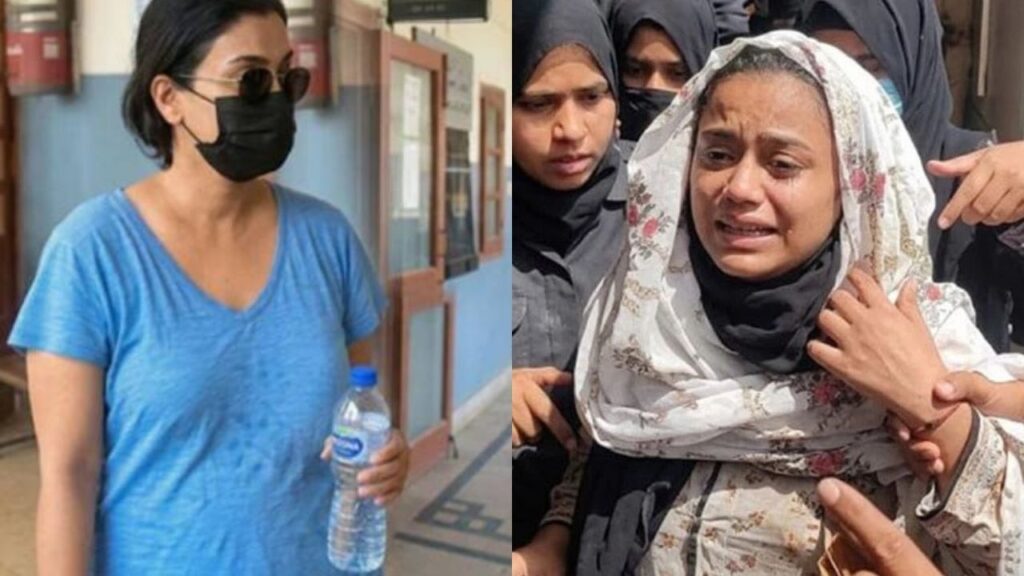
The Noor Mukadam case is one of the most significant criminal cases in Pakistan’s recent history. It not only drew nationwide attention because of the tragic death of a young woman but also became a landmark case that tested the country’s criminal justice system. The investigation, court proceedings, forensic evidence, and eventual Supreme Court judgment were followed closely by millions of Pakistanis.
The public demand for justice led to the nationwide #JusticeForNoor movement, with citizens, journalists, lawyers, and women’s rights advocates calling for a transparent investigation and fair trial. The case also reignited discussions about women’s safety, domestic violence, accountability, and the importance of forensic science in criminal investigations.
This comprehensive guide explains the entire case from Noor Mukadam’s background and the events leading up to 20 July 2021, to the police investigation, trial court judgment, Islamabad High Court proceedings, Supreme Court decision, and the latest legal developments. Every section is based on publicly reported facts and court proceedings.

Noor Mukadam was born on 23 October 1993 into a respected Pakistani family known for its diplomatic service. She was the daughter of Shaukat Mukadam, a senior Pakistani diplomat who represented Pakistan in several countries during his distinguished career.
Growing up in a diplomatic household, Noor spent part of her childhood abroad before returning to Pakistan. Friends and acquaintances described her as a warm, independent, and compassionate person with a love for travel, photography, fashion, and animals. She preferred to keep a low public profile and was not a public figure before the incident that brought her name into the national spotlight.
At just 27 years old, Noor’s life was tragically cut short on 20 July 2021. Her death shocked the nation and became a symbol of the urgent need to address violence against women in Pakistan.
One of the most searched Google queries related to the case is “Noor Mukadam father.”
Shaukat Mukadam is a former Pakistani ambassador and career diplomat. Throughout the investigation and court proceedings, he remained a calm yet determined advocate for justice for his daughter. He attended hearings, spoke publicly on important occasions, and consistently expressed confidence in Pakistan’s legal system while urging that the case be decided strictly on evidence.
His dignified approach earned respect from many across the country.
Noor’s mother remained by the family’s side throughout the legal process. According to court proceedings and public reporting, Noor managed to communicate with her mother shortly before the incident, making those final moments especially heartbreaking for the family.
Despite immense personal loss, Noor’s parents consistently emphasized the importance of allowing the legal process to take its course.
Another frequently searched keyword is “Noor Mukadam siblings.”
Noor had siblings, but they have largely remained out of the public eye. The family has maintained their privacy, and very little verified information has been shared publicly about them. Out of respect for their privacy, media coverage has focused primarily on the legal proceedings rather than the family’s personal lives.

The man convicted in the case was Zahir Zakir Jaffer, the son of businessman Zakir Jaffer.
Zahir belonged to a well-known business family in Islamabad. Before the incident, he had studied abroad and was known socially in certain circles. According to the prosecution, Noor and Zahir knew each other before July 2021. However, the courts based their decisions on the evidence presented during the investigation rather than on the nature of their prior relationship.
The Noor Mukadam case attracted unprecedented public attention for several reasons:
The proceedings also highlighted the growing importance of forensic science, digital evidence, and transparent judicial processes in modern criminal investigations.

One of the most searched questions on Google is “What happened in the Noor Mukadam case?” To answer that, it’s important to understand the sequence of events that investigators reconstructed through CCTV footage, witness statements, digital evidence, and forensic reports.
According to the prosecution’s case, Noor Mukadam went to the residence of Zahir Jaffer in Islamabad on 18 July 2021.
Later that day, both Noor and Zahir left the house together and traveled toward Islamabad International Airport in a taxi. Court records and witness testimony showed that Zahir was expected to travel abroad.
However, before reaching the airport, he instructed the taxi driver to turn around and return to his residence.
The two went back to the house.
At that stage, nothing suggested that the next two days would become one of the most closely watched criminal investigations in Pakistan’s history.
According to the prosecution, Noor remained inside the residence throughout the following day.
Evidence presented during the trial suggested that she attempted to leave the property but was unable to do so.
Family members reportedly became increasingly concerned after they were unable to contact her.
Investigators later used mobile phone records, witness statements, and CCTV footage to help reconstruct the events of this period.
The morning of 20 July 2021 became a crucial part of the investigation.
According to evidence discussed during court proceedings, Noor managed to communicate with her mother before the incident. This communication became one of the final confirmed contacts between Noor and her family.
As the day progressed, investigators alleged that Noor repeatedly tried to leave the residence.

One of the strongest pieces of evidence presented during the trial was CCTV footage from the property.
The footage was used to establish the movements of individuals inside and around the residence and supported the prosecution’s timeline.
The courts considered this evidence together with forensic reports and witness testimony rather than relying on any single piece of evidence.
This is one reason why the Noor Mukadam CCTV footage continues to be widely searched online.
Later on 20 July 2021, Islamabad Police received information about the incident and immediately responded.
When officers arrived at the residence, they secured the crime scene and arrested Zahir Jaffer at the location.
The immediate arrest of the accused allowed investigators to preserve important physical and digital evidence without significant delay.
Police quickly began collecting the following:
This prompt response became a key factor in the investigation.

Following the initial investigation, police registered a First Information Report (FIR) under the relevant provisions of the Pakistan Penal Code.
The FIR formally initiated the criminal case and allowed investigators to proceed with evidence collection, forensic examinations, and witness interviews.
The case was then transferred to investigators specializing in homicide investigations.
Investigators spent the following days collecting evidence from multiple sources.
The investigation included:
Police examined the residence carefully to preserve the crime scene and recover material evidence relevant to the case.
Investigators seized:
Digital forensic experts later analyzed these devices to help establish the timeline.
Police interviewed:
Each statement was compared with the available physical and digital evidence.
Medical experts conducted examinations as part of the investigation.
Forensic specialists also analyzed:
The prosecution later argued that these findings supported the overall sequence of events presented before the court.
Legal experts often described the Noor Mukadam investigation as one of the most evidence-based criminal investigations in Pakistan in recent years.
Rather than relying on a confession alone, prosecutors presented multiple categories of evidence that supported each other.
These included:
✔ CCTV footage
✔ Digital evidence
✔ DNA reports
✔ Medical reports
✔ Witness testimony
✔ Crime scene evidence
✔ Police investigation records
The combination of these materials formed the foundation of the prosecution’s case.
As news of the case spread, public concern grew rapidly.
Within hours, social media users began demanding a transparent investigation.
The hashtag #JusticeForNoor started trending across Pakistan.
Journalists, lawyers, civil society organizations, and members of the public called for accountability and a fair trial based on evidence.
The case soon became a national conversation about women’s safety, criminal justice, and the importance of equal application of the law.

The Noor Mukadam case quickly became one of Pakistan’s most thoroughly investigated criminal cases. From the moment police arrived at the crime scene, investigators focused on collecting evidence that could withstand scrutiny in court. Rather than relying on a single witness or confession, the prosecution built its case using forensic science, digital records, CCTV footage, and eyewitness testimony.
This chapter explains how investigators pieced together the events that led to Noor Mukadam’s death and prepared the case for trial.

Following the incident on 20 July 2021, Islamabad Police immediately sealed the residence to preserve the crime scene. A specialized investigation team was formed to collect evidence, interview witnesses, and prepare the case for prosecution.
Investigators focused on several key areas:
Officials stated that every piece of evidence had to be documented carefully because the case was expected to receive intense public and legal scrutiny.
Forensic experts spent several hours documenting the scene.
Their work included:
The careful preservation of evidence later became one of the prosecution’s strongest points during the trial.
One of the most searched keywords is “Noor Mukadam CCTV.”
The CCTV recordings recovered during the investigation became an important part of the prosecution’s evidence.
According to court proceedings, the footage helped investigators establish:
Instead of relying only on witness testimony, prosecutors used the CCTV footage to support the sequence of events established through other evidence.
Because the recordings were examined alongside forensic reports and witness statements, the courts considered them reliable supporting evidence rather than isolated proof.
Modern criminal investigations increasingly depend on electronic evidence, and the Noor Mukadam case was no exception.
Investigators examined:
Digital forensic experts prepared reports that helped investigators reconstruct the timeline before and after the incident.
These findings were later presented before the trial court.
Investigators examined Noor’s and Zahir Jaffer’s mobile phones to determine:
The prosecution argued that this electronic evidence supported the overall timeline established through CCTV footage and witness statements.
One of the strongest aspects of the prosecution’s case was its reliance on forensic science.
Experts conducted detailed examinations that included:
DNA samples collected during the investigation were analyzed by forensic laboratories.
Investigators preserved biological samples according to forensic procedures.
Medical experts prepared reports that later became part of the court record.
Different laboratories examined physical evidence collected from the crime scene.
Their reports were submitted to investigators and later presented before the court.
The investigation involved statements from numerous witnesses.
These included:
Each statement was compared with physical and digital evidence to identify inconsistencies or corroborate the timeline.
The investigation also examined the actions of employees associated with Therapy Works, a counseling organization.
Several employees faced legal proceedings because of allegations that they had reached the residence before the police.
During the trial, the court examined whether there was sufficient evidence to establish criminal liability.
After hearing witnesses and reviewing the evidence, the trial court acquitted the Therapy Works employees. Their acquittals were later upheld during the appeals process.
Another topic that generated public interest was the investigation involving Zahir Jaffer’s parents.
Police examined whether there was evidence linking them to the alleged offenses.
After reviewing witness testimony, digital evidence, and other materials, the courts concluded there was insufficient evidence to convict them.
Both were acquitted, and those acquittals remained unchanged during subsequent appeals.
After completing the investigation, Islamabad Police prepared the challan, the formal report submitted to the trial court.
The challan included:
The submission of the challan marked the official beginning of the court proceedings.
The trial began before the District and Sessions Court in Islamabad.
The prosecution called numerous witnesses to present evidence before the court.
These included:
The defense also presented its arguments and cross-examined prosecution witnesses.
One of the issues raised during the proceedings concerned Zahir Jaffer’s mental health.
The defence argued that this issue should be considered by the court.
The prosecution, however, argued that the available medical evidence and other facts did not establish a legal defence that would prevent criminal responsibility.
After examining the evidence, the courts rejected the defence’s arguments and proceeded with the case on its merits.
Many criminal law experts described the Noor Mukadam prosecution as particularly strong because it relied on multiple independent categories of evidence rather than one key witness.
The evidence included:
Because these different categories of evidence supported each other, prosecutors argued that they established the accused’s guilt beyond reasonable doubt.

As witness testimony unfolded, the case dominated headlines across Pakistan.
Television channels covered daily proceedings.
Legal analysts discussed important developments.
Women’s rights organizations continued demanding accountability.
The hashtag #JusticeForNoor remained active across social media platforms throughout the trial.
After months of investigation, forensic examinations, and witness testimony, the Noor Mukadam case entered its most critical phase—the court proceedings. The case moved through three levels of Pakistan’s judicial system: the District and Sessions Court, the Islamabad High Court (IHC), and finally the Supreme Court of Pakistan. Each court reviewed the evidence independently before reaching its conclusions.
The trial officially began in Islamabad after the police submitted the challan.
Because of the intense public interest, every hearing was closely followed by journalists, legal experts, and members of civil society. The courtroom became the focal point of one of Pakistan’s most closely watched criminal prosecutions.
During the proceedings, the prosecution presented dozens of witnesses and relied on documentary, forensic, medical, and digital evidence.
The prosecution argued that the available evidence established a complete chain of events and left little room for reasonable doubt.
During the trial, prosecutors submitted several categories of evidence, including:
The CCTV recordings recovered during the investigation were played before the court.
The footage helped establish the timeline and movements of the people involved inside and around the residence.
Medical experts testified regarding their findings and submitted official reports prepared during the investigation.
These reports formed an important part of the prosecution’s case.
Forensic laboratories submitted reports relating to:
These reports were discussed extensively during witness testimony.
Investigators also produced:
Digital evidence helped prosecutors reconstruct the sequence of events before the incident.
The prosecution examined:
Each witness was cross-examined by the defence.
The defence challenged various aspects of the prosecution’s case.
Among other arguments, the defence questioned:
The trial court carefully considered these arguments before delivering its judgment.
On 24 February 2022, the District and Sessions Court announced its verdict.
After reviewing the evidence, the court convicted Zahir Jaffer of Noor Mukadam’s murder and imposed the death penalty for the murder conviction.
The court also convicted him of rape and wrongful confinement, imposing additional punishments under the applicable laws.
At the same time:
The judgment was welcomed by many members of the public, while the defence exercised its legal right to appeal.
After the trial court’s decision, both the defence and the prosecution filed appeals before the Islamabad High Court (IHC).
The High Court reviewed:
The judges examined whether the trial court had correctly interpreted both the facts and the law.
On 13 March 2023, the Islamabad High Court announced its judgment.
The Court:
The High Court concluded that the prosecution had successfully proved its case based on the evidence presented.
The case then reached the Supreme Court of Pakistan, the country’s highest judicial authority.
Because of the public importance of the case, the proceedings attracted nationwide attention.
The Supreme Court carefully reviewed:
Unlike a trial court, the Supreme Court primarily examined whether the lower courts had correctly applied the law and properly evaluated the evidence.
On 20 May 2025, the Supreme Court announced its decision.
The Court ruled that the evidence against Zahir Jaffer was sufficient to uphold his conviction for Noor Mukadam’s murder.
The Court:
The judgment marked the conclusion of the main appeals before Pakistan’s highest court.
A common question readers ask is why the Supreme Court changed the punishment for one offence while maintaining the death sentence for murder.
The Court did not overturn the rape conviction. Instead, it modified the punishment for that offence from death to life imprisonment, while keeping the death sentence for the murder conviction intact.
As a result, the most severe punishment in the case the death sentence for murder remained unchanged.
After the Supreme Court’s judgment, Zahir Jaffer filed a review petition, requesting the Court to reconsider its decision.
Review petitions are limited legal proceedings in which the Court examines whether there was a significant legal error in its earlier judgment.
After hearing the arguments, the Supreme Court dismissed the review petition, finding no reason to alter its previous decision.
This meant:

As of the latest publicly reported legal developments:
The case is now regarded as one of the most significant criminal judgments in Pakistan’s modern legal history.
Beyond the courtroom, the Noor Mukadam case left a lasting impact on public discourse.
The proceedings highlighted:
The case also demonstrated how sustained public interest and media attention can coexist with the need for courts to decide cases based on evidence and the rule of law rather than public opinion.
Noor Mukadam was a 27-year-old Pakistani woman and the daughter of former diplomat Shaukat Mukadam. She was murdered in Islamabad on 20 July 2021.
Noor Mukadam was killed at a residence in Islamabad. Zahir Jaffer was arrested at the scene, and after investigation and multiple court proceedings, he was convicted.
Her father is Shaukat Mukadam, a retired Pakistani diplomat and former ambassador.
Noor’s mother supported the legal proceedings throughout the case and remained with the family during every major hearing.
Yes. However, Noor’s siblings have maintained their privacy, and little verified public information has been disclosed about them.
Zahir Zakir Jaffer is the man convicted of Noor Mukadam’s murder.
Court proceedings established that they knew each other before the incident. However, the courts focused on the evidence presented rather than speculation about their personal relationship.
On 20 July 2021, police responded to an incident at a residence in Islamabad where Noor Mukadam was found dead. Zahir Jaffer was arrested at the scene.
The case became a landmark criminal prosecution in Pakistan because of the extensive forensic evidence, public attention, and the legal proceedings that reached the Supreme Court.
CCTV footage helped investigators reconstruct the sequence of events and supported the prosecution’s timeline.
Verified CCTV footage formed part of the court record. People should avoid relying on edited or misleading clips circulating on social media.
The prosecution relied on DNA reports, biological evidence, medical examinations, crime scene documentation, and digital evidence.
Investigators analyzed:
The Supreme Court upheld his conviction for murder and maintained the death sentence for that offence while changing the rape sentence to life imprisonment.
No. They were acquitted, and those acquittals remained unchanged during the appeals process.
The courts acquitted the Therapy Works employees after concluding there was insufficient evidence to convict them.
The Islamabad High Court upheld the murder conviction and confirmed key findings of the trial court while modifying certain punishments.
The Supreme Court upheld the murder conviction and death sentence, modified the punishment for the rape conviction to life imprisonment, and left the acquittals of the other accused unchanged.
The Supreme Court dismissed the review petition, meaning its earlier judgment remained unchanged.
The principal criminal proceedings have concluded before the Supreme Court. Any further legal steps would depend on the procedures available under Pakistani law.
| Date | Event |
|---|---|
| 18 July 2021 | Noor Mukadam visited Zahir Jaffer’s residence. |
| 20 July 2021 | Police responded to the residence; Noor Mukadam was found dead, and Zahir Jaffer was arrested. |
| 2021 | Investigation completed and police submitted the challan. |
| 24 February 2022 | Sessions Court convicted Zahir Jaffer. |
| 13 March 2023 | The Islamabad High Court upheld the murder conviction. |
| 20 May 2025 | The Supreme Court upheld the murder conviction and death sentence while modifying the punishment for the rape conviction. |
| 2026 | The Supreme Court dismissed the review petition, leaving the earlier judgment unchanged |
The Noor Mukadam case remains one of Pakistan’s most significant criminal cases, not only because of its tragic circumstances but also because of its impact on public discourse and the legal system. The investigation, supported by forensic science, digital records, CCTV footage, and witness testimony, moved through every level of the country’s judiciary.
From the District and Sessions Court to the Islamabad High Court and finally the Supreme Court, the case underscored the importance of evidence-based justice. It also prompted nationwide conversations about women’s safety, accountability, and the rule of law.
Although the principal legal proceedings have concluded, Noor Mukadam’s story continues to resonate with many Pakistanis. The case is remembered as a reminder of the need for effective investigations, fair trials, and continued efforts to protect vulnerable members of society.