Now Reading: Sanam Saeed Defends Dur-e-Fishan Saleem Amid Criticism Over Dar-e-Nijat Performance
-
01
Sanam Saeed Defends Dur-e-Fishan Saleem Amid Criticism Over Dar-e-Nijat Performance
Sanam Saeed Defends Dur-e-Fishan Saleem Amid Criticism Over Dar-e-Nijat Performance

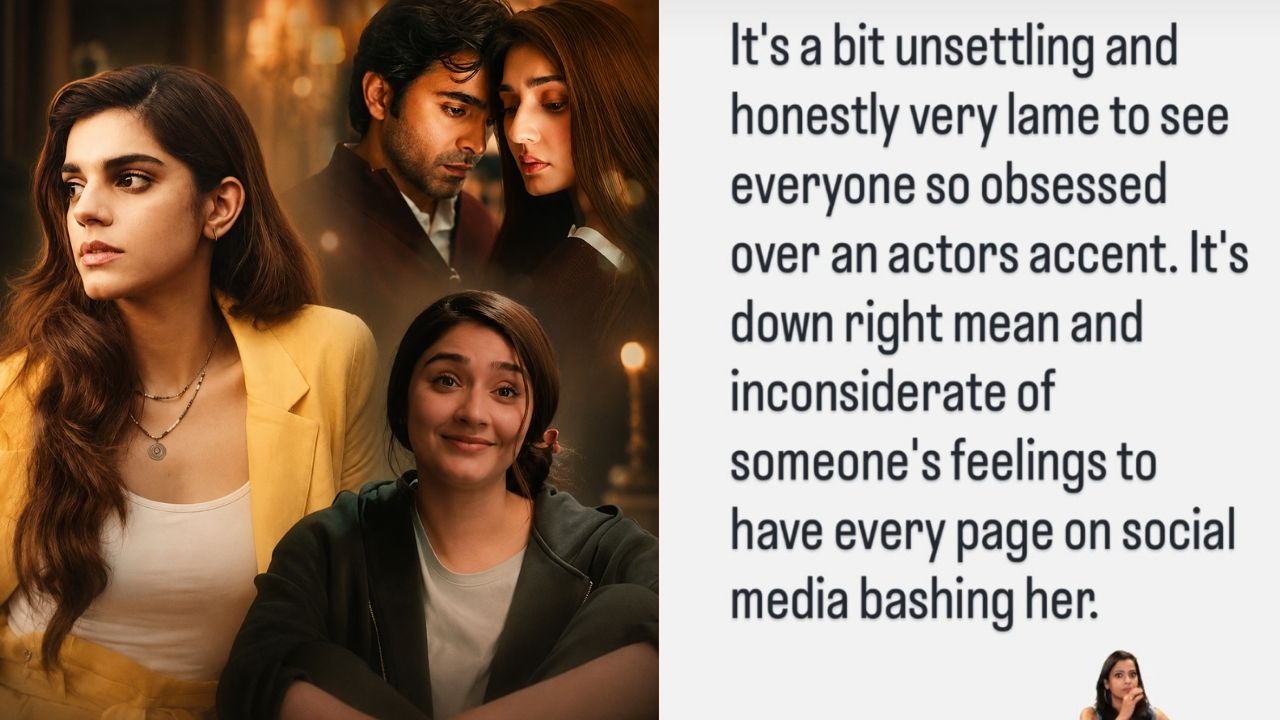
The conversation around ARY Digital’s latest prime-time drama Dar-e-Nijat has taken an interesting turn after actor Sanam Saeed publicly came to Dur-e-Fishan Saleem’s defence. While the young actress has faced criticism for her performance, particularly her Urdu and English accent and dialogue delivery, Sanam believes the intense focus on the way an actor speaks has gone too far.
Written by Umera Ahmed and directed by Saqib Khan, Dar-e-Nijat explores spirituality through the story of a young woman dealing with her beliefs, ambitions and personal journey. The drama features Dur-e-Fishan Saleem in the lead role of Zaryab, a cheerful and carefree young woman who values her liberal lifestyle while remaining deeply focused on her career and future.

Dur-e-Fishan Faces Strong Viewer Reactions
Since the drama began airing, Dur-e-Fishan’s portrayal of Zaryab has become one of the major talking points among viewers. While the actress has a strong following, her performance in Dar-e-Nijat has also attracted considerable criticism online.
A major part of the discussion has centred on her accent and the way she delivers her dialogues in both Urdu and English. Some viewers have questioned whether her distinctive manner of speaking suits the character, while others have found her delivery difficult to connect with.
The criticism has continued across social media, making the actress’s speech pattern one of the most discussed aspects of the drama.
Sanam Saeed Questions the Online Backlash
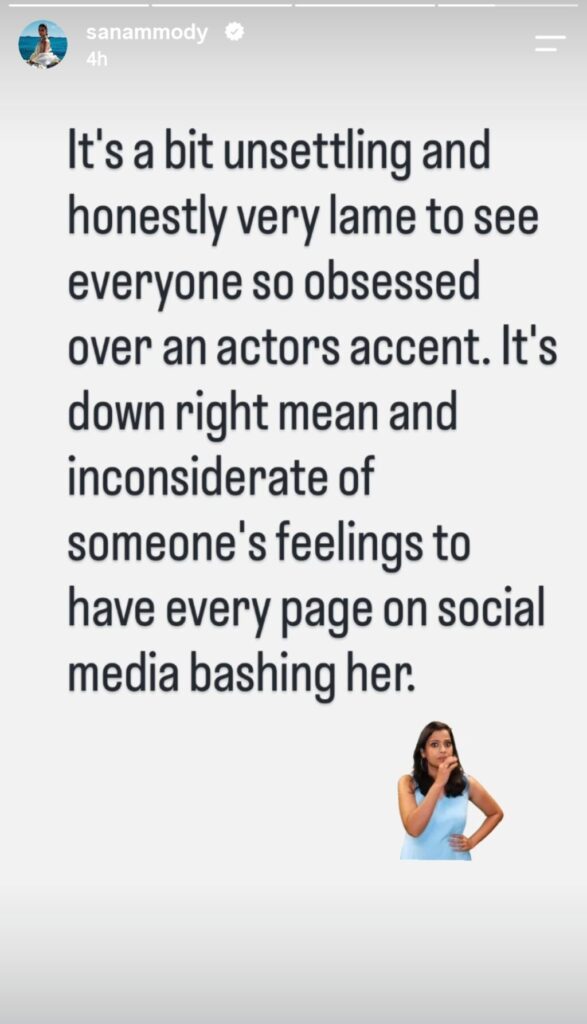
Amid the ongoing conversation, Sanam Saeed took to Instagram to share her thoughts on the criticism.
The veteran actor expressed disappointment at what she described as an excessive obsession with an actor’s accent. She wrote:
“It’s a bit unsettling and honestly very lame to see everyone so obsessed over an actor’s accent. It’s downright mean and inconsiderate of someone’s feelings to have every page on social media bashing her.”
Sanam’s statement shifts the discussion away from simply judging a performance and towards the way criticism is delivered online. Her comments suggest that repeated public attacks can become unnecessarily personal, particularly when they focus heavily on an individual actor.
The Debate Goes Beyond Accent
Sanam’s comments have since sparked another round of discussion among drama viewers.
While some people agree with her and believe Dur-e-Fishan should not be subjected to constant online criticism, others argue that viewers are not necessarily objecting to her accent itself. According to some comments, the larger issue is the actress’s overall dialogue delivery and her distinctive speaking style.
This distinction has become an important part of the debate. For some viewers, it is not about whether an actor has a particular accent, but whether the delivery feels natural within the context of the character and story.
Viewers Have Different Opinions
The reaction from viewers has been mixed. Some have pointed out that people across Pakistan naturally speak in different accents and styles, making it unfair to expect every performer to sound exactly the same.
Others remain critical of Dur-e-Fishan’s delivery and believe that her particular way of speaking is noticeable enough to affect their viewing experience.
One viewer summed up that perspective in a comment, writing:
“It’s not about accent, I think she speaks like that yeh asal mein bhi jhatke maar ke bolti hai.”
The comment reflects the broader argument from viewers who believe their criticism is aimed at the actress’s delivery rather than her accent alone.
What Is Dar-e-Nijat About?
Dar-e-Nijat is built around themes of spirituality, personal beliefs and ambition. The drama follows Zaryab as she navigates her own beliefs while pursuing the life and future she wants.
The serial has been written by acclaimed writer Umera Ahmed and directed by Saqib Khan. Sheheryar Munawar Siddiqui, Salman Iqbal and Sonya Salman Iqbal are serving as producers.
With its spiritual themes and contemporary character journey, the drama has attracted attention even as its lead performance continues to generate debate.
The Drama Is Also Facing Viewership Pressure
The discussion surrounding Dur-e-Fishan’s performance comes at a time when Dar-e-Nijat is reportedly receiving average viewership and TRP numbers.
For any prime-time television drama, audience response can have a major impact on its position in the competitive Pakistani television landscape. As the story progresses, viewers will ultimately determine whether the drama’s characters and narrative succeed in building stronger engagement.
For now, however, much of the online conversation remains focused on Zaryab and Dur-e-Fishan’s portrayal of her.
Sanam Saeed’s Message Adds Another Perspective
Sanam Saeed’s intervention has added a fresh dimension to the discussion. Rather than simply joining the debate over whether Dur-e-Fishan’s performance works, she has questioned the culture of repeatedly targeting actors on social media.
Her comments also highlight a familiar challenge for performers: public feedback can quickly move from criticism of a character or performance to criticism of the person behind it.
Whether viewers eventually warm to Dur-e-Fishan’s portrayal remains to be seen. What is clear is that her performance in Dar-e-Nijat has generated a conversation that extends well beyond the drama itself.
As the serial continues, audiences will have more opportunities to judge Zaryab’s character, the direction of her journey and Dur-e-Fishan’s performance on its own terms. For now, Sanam Saeed’s public support has made the debate around the actress even more prominent.