
Now Reading: How to Get Rid of Dandruff: Easy Home Remedies and Scalp Care Tips
-
01
How to Get Rid of Dandruff: Easy Home Remedies and Scalp Care Tips

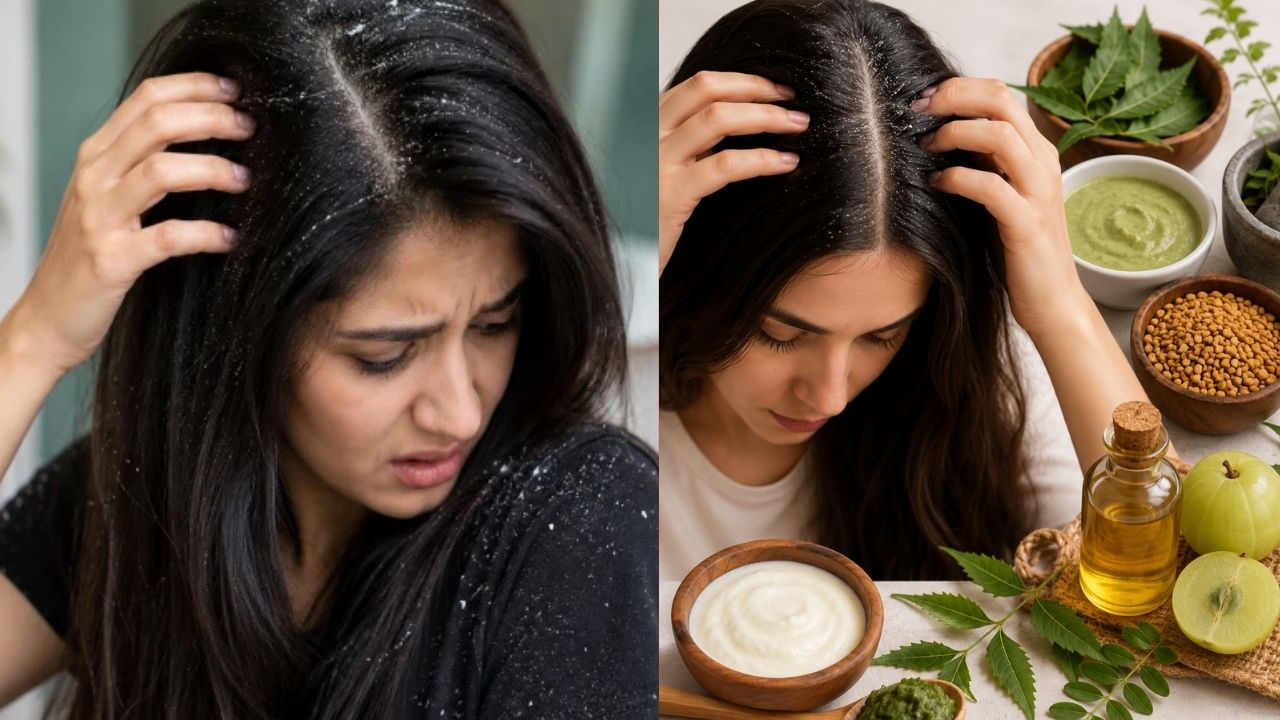
Dandruff is a common scalp concern that can leave hair looking less fresh while causing persistent itching and visible white flakes. For some people, the problem can also appear around the eyebrows, sides of the nose, and other areas of the face.
While regular scalp care is important, several traditional home remedies are also commonly used to manage dandruff. However, persistent or severe symptoms may require professional medical advice.
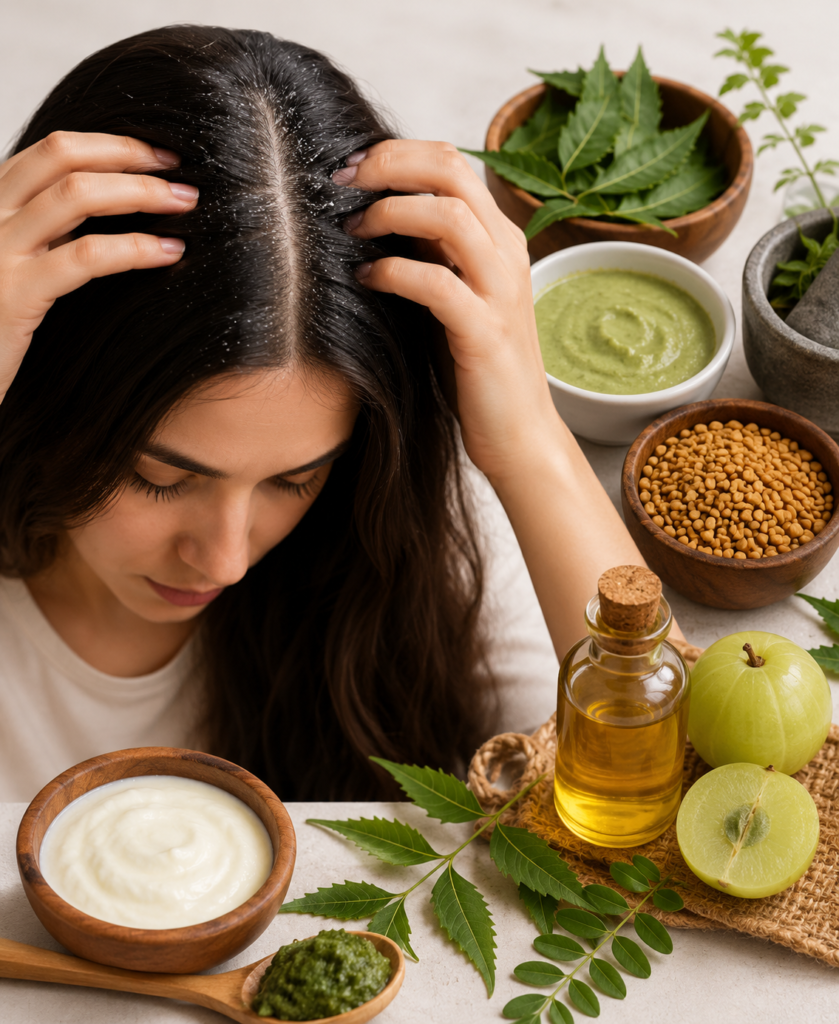
Neem for Scalp Care
Neem has long been used in traditional hair and skincare routines. One commonly used approach is to grind neem leaves and combine them with yogurt to create a scalp mask.
The mixture can be applied to the scalp for around 20 minutes before being rinsed thoroughly. Neem is also known for its antifungal properties, which is why neem-based oils and hair-care products are often used as part of dandruff-focused routines.
Amla Can Be Part of a Hair-Care Routine
Amla is another traditional ingredient widely associated with hair care. Amla powder can be mixed with water to form a paste, and some people also add basil leaves to the mixture.
The paste can be left on the scalp for about 30 minutes before washing the hair with a good-quality shampoo. As with any home treatment, it is sensible to stop using it if it causes irritation or discomfort.
Try Fenugreek Seeds
Fenugreek seeds are another popular traditional option for scalp and hair care. To prepare a simple fenugreek paste, soak the seeds in water overnight and grind them the following morning.
Apply the resulting paste to the scalp and leave it for approximately 30 minutes before washing the hair thoroughly.
Choosing the Right Anti-Dandruff Shampoo
Home remedies may be useful as part of a broader hair-care routine, but recurring dandruff may benefit from a suitable anti-dandruff shampoo.
Keeping the scalp clean on a regular basis can help reduce the buildup of excess oil, dead skin, and flakes. If dandruff continues to return despite consistent care, choosing an appropriate anti-dandruff product may be more useful than relying solely on home treatments.
Don’t Overlook Your Diet
Healthy hair and skin also benefit from a balanced diet. Including adequate protein, vitamins, minerals, and healthy fats in everyday meals supports overall nutritional health and can contribute to maintaining healthy hair and skin.
Rather than relying on one particular food or ingredient, focus on a varied and balanced eating pattern.
When Should You See a Dermatologist?
Not every flaky scalp is simply dandruff. Medical advice is particularly important if the condition becomes severe, the scalp develops significant itching or redness, wounds begin to appear, or the problem continues despite using an anti-dandruff shampoo.
In some cases, similar symptoms can be associated with conditions such as seborrheic dermatitis, eczema, or another skin disorder. A dermatologist can assess the symptoms and recommend appropriate treatment.
The Bottom Line
A consistent scalp-care routine, regular cleansing, and a suitable anti-dandruff shampoo can help manage recurring flakes. Traditional ingredients such as neem, amla, and fenugreek are also commonly used in home hair-care routines.
However, persistent irritation or worsening symptoms should not be ignored. When dandruff does not improve, professional guidance is the safer and more effective next step.