Now Reading: Kanwal Aftab Responds to Body and Age Shaming With a Message About Self-Acceptance
-
01
Kanwal Aftab Responds to Body and Age Shaming With a Message About Self-Acceptance
Kanwal Aftab Responds to Body and Age Shaming With a Message About Self-Acceptance


Kanwal Aftab has addressed the growing tendency to judge people based on their appearance, age, clothing and personal choices, using a series of Instagram Stories to encourage greater understanding and self-acceptance.
The Pakistani digital creator’s comments touched on several forms of criticism that people can encounter online, including remarks about body shape, complexion, the way someone speaks, clothing, and perceived age. Rather than focusing solely on her own experience, Kanwal used the conversation to highlight the wider impact such comments can have on others.
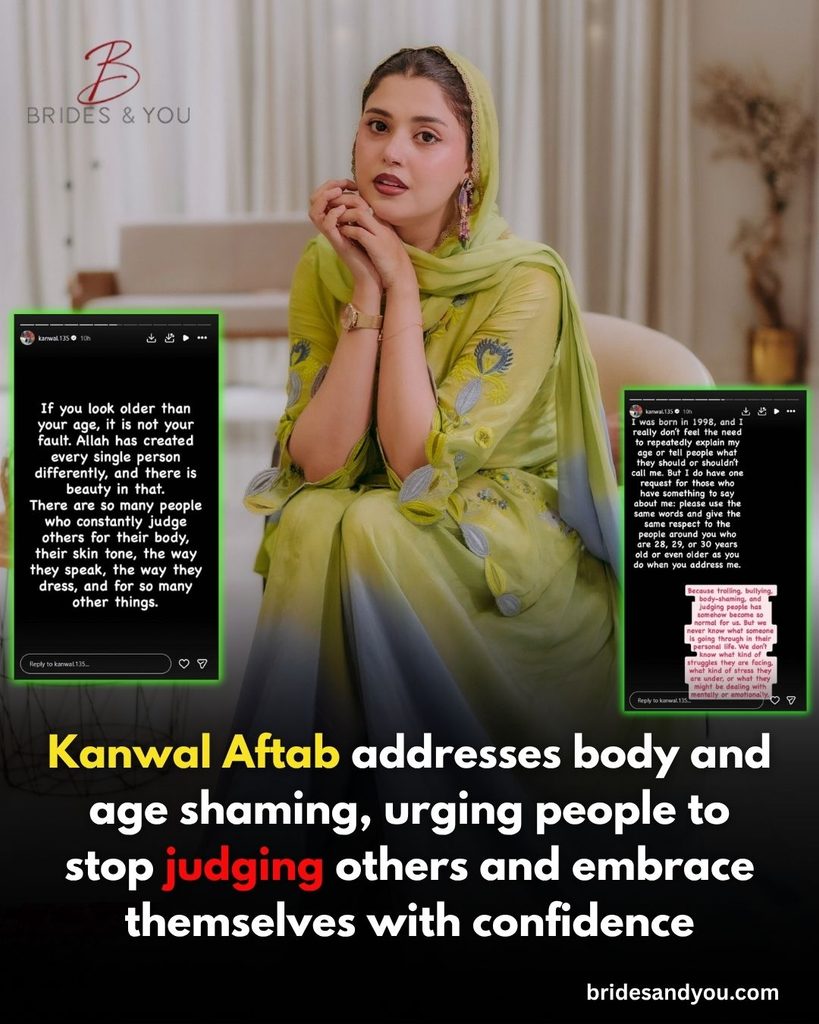
Kanwal Aftab addresses comments about age
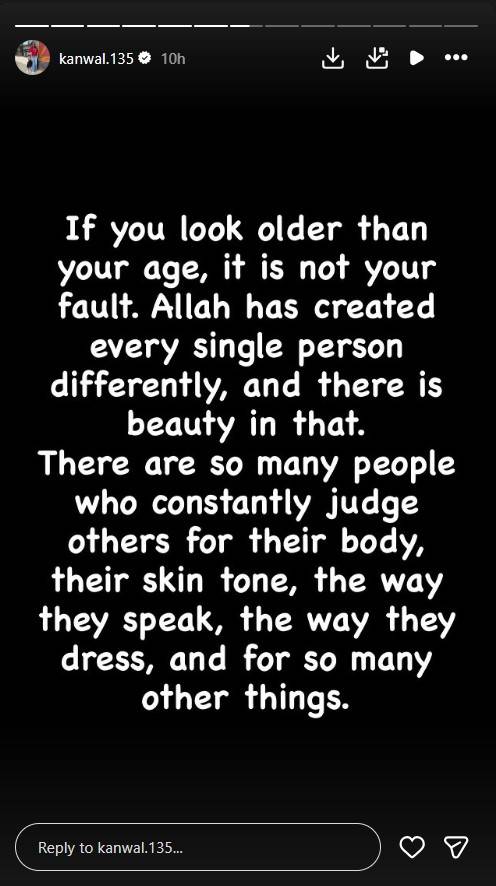
One of the issues she specifically discussed was the tendency to criticize people for appearing older than their actual age.
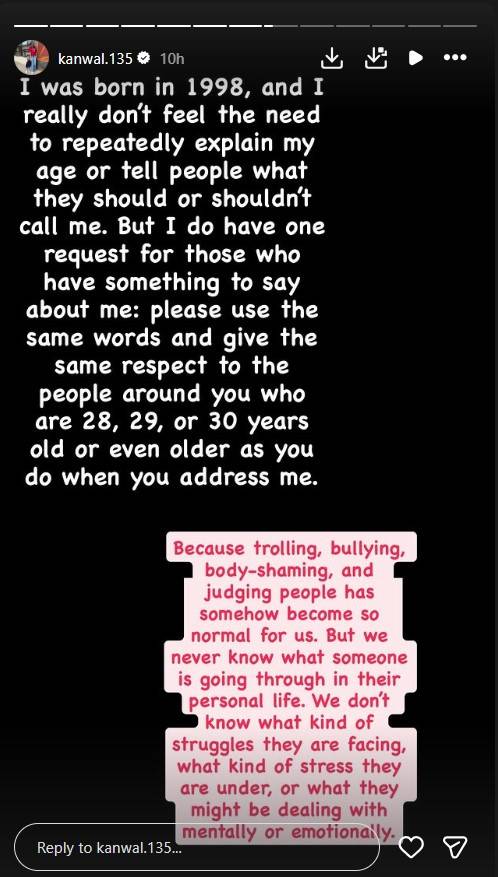
Kanwal explained that looking older is not something a person should be blamed for, pointing out that everyone is created differently. She also addressed questions surrounding her own age, revealing that she was born in 1998.
Rather than repeatedly explaining her age or deciding what others should call her, she asked people to show the same consideration to others who are in their late twenties and beyond.
Her comments shift the focus away from age as something that should determine how a person is treated and towards the importance of respecting individual differences.
Her message goes beyond appearance.
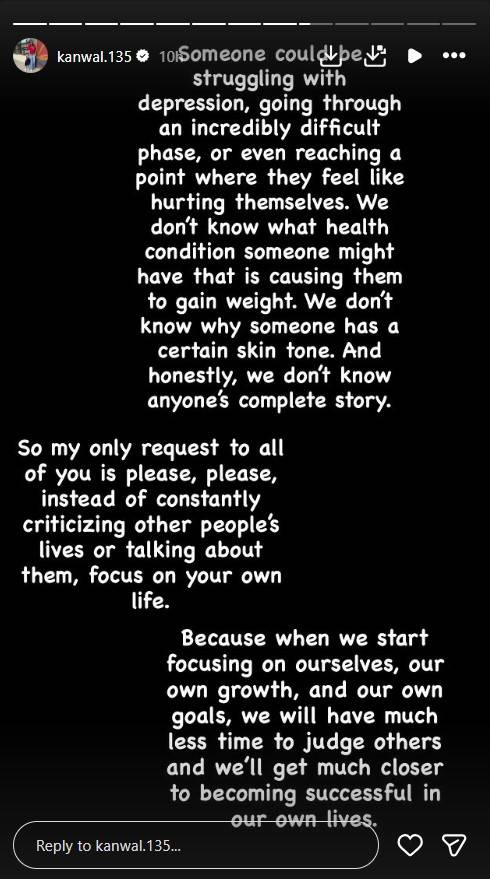
Kanwal also spoke about the broader culture of online judgement. In her Instagram Stories, she highlighted how people can face criticism over their weight, skin tone, speech, clothes and other aspects of their appearance.
She stressed that outsiders cannot know everything happening in another person’s private life. Someone facing comments about their body or appearance could also be dealing with personal difficulties, stress or health-related circumstances that are not visible to others.
That uncertainty, according to Kanwal’s message, is an important reason to avoid making assumptions about someone based only on what can be seen.
A reminder to look inward
Another central point in Kanwal’s posts was her call for people to spend more energy on their own lives rather than constantly evaluating others.
She encouraged her followers to concentrate on personal growth and their own goals, suggesting that doing so leaves less room for judging people around them.
The message also reflects a broader conversation around social media culture, where appearance-based comments can quickly become part of everyday online interaction. Kanwal’s remarks draw attention to the difference between casual criticism and the possible emotional effect it can have on someone receiving it.
Kanwal says she has learned to move past criticism
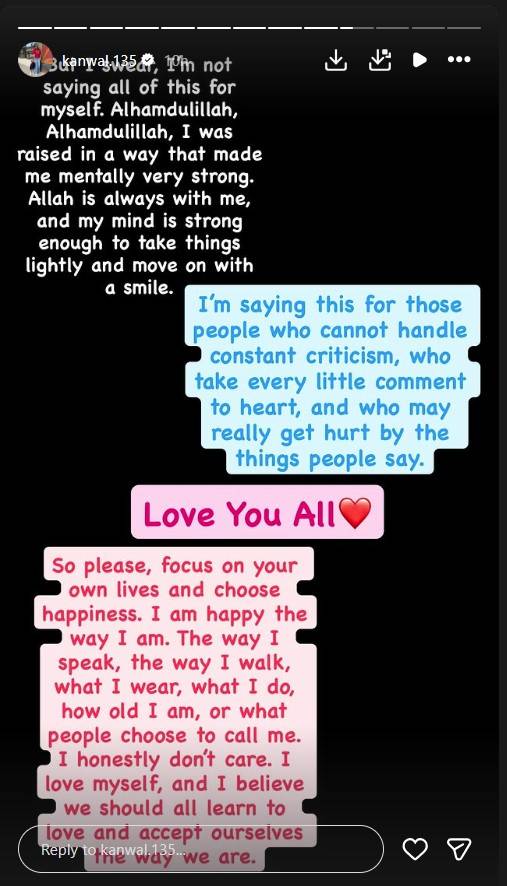
While discussing the issue, Kanwal made it clear that she does not view herself as unable to handle negative comments.
She credited her upbringing and faith with helping her develop a strong mindset, saying that she is able to take hurtful remarks lightly and move forward.
Her concern, she explained, is particularly directed towards people who may not find it as easy to cope with repeated criticism. What may seem like an insignificant comment to one person can affect someone else much more deeply.
Her final message centres on self-acceptance
Kanwal ultimately returned to the idea of being comfortable with one’s identity and personal choices. She expressed acceptance of the way she looks, speaks, dresses, and lives, as well as her age and the labels other people may choose to use for her.
Her wider message was that people should learn to accept themselves instead of allowing outside judgement to define their sense of worth.
By addressing both her own experience and the broader issue of appearance-based criticism, Kanwal Aftab has opened a conversation about how easily online commentary can cross the line into unnecessary judgement. Her message encourages a more considerate approach: before commenting on someone else’s appearance or life, people should remember that they may not know the full story behind it.