Now Reading: PIA Uniforms Get a Fashion Makeover as Leading Pakistani Designers Reimagine Airline Style
-
01
PIA Uniforms Get a Fashion Makeover as Leading Pakistani Designers Reimagine Airline Style
PIA Uniforms Get a Fashion Makeover as Leading Pakistani Designers Reimagine Airline Style

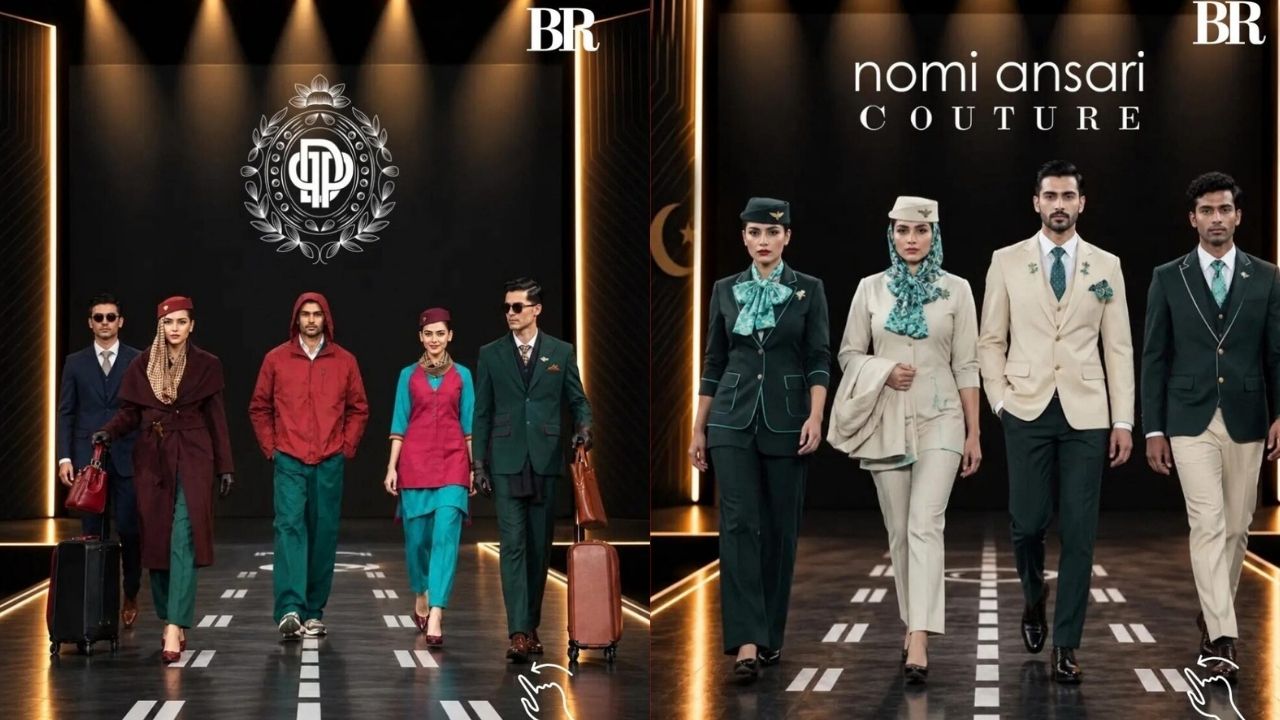
Pakistan International Airlines is set to receive a striking fashion-focused makeover, with some of the country’s recognised designers offering their creative interpretations of what the airline crew could wear.
The development comes as PIA undergoes changes following its privatization. Alongside the broader transformation of the airline, attention has now turned to the appearance of its staff, with new uniform concepts bringing fashion and aviation together.


Designers Bring Their Own Vision to PIA Style
A group of prominent names from Pakistan’s fashion industry have presented their takes on potential PIA air-host and air-hostess uniforms.
The designers featured include HSY, Ismail Farid, Generation, Amir Adnan, Nomi Ansari, and Deepak and Fahad, among others. Each concept reflects a different approach to presenting airline staff, giving viewers several interpretations of how PIA’s future look could combine professionalism with Pakistani fashion.
Rather than one uniform concept dominating the showcase, the designs offer a variety of silhouettes and styling directions. This has made the presentation particularly interesting for fashion followers, who have been looking closely at the individual designers’ approaches.
PIA’s Fashion History Adds Context
Uniforms have long been an important part of an airline’s visual identity, and PIA has its own notable history in this area. Images from the airline’s earlier years continue to attract attention for their distinctive staff styling and have, over time, remained a reference point for fashion enthusiasts.
The latest designer showcase therefore carries an interesting connection to that history. It places contemporary Pakistani fashion talent alongside the visual legacy associated with PIA’s earlier image.
For an airline, a uniform is more than everyday workwear. It becomes part of the public-facing identity of the crew and can contribute to how passengers perceive the brand. That makes the designers’ interpretations relevant beyond fashion alone.
Social Media Users Are Already Picking Favourites
The proposed looks have also sparked discussion online, with viewers expressing preferences among the different designs.
Some social-media users highlighted HSY’s interpretation, while others praised the styling associated with Ismail Farid and Nomi Ansari. The reactions show that the uniform concepts have quickly become a subject of fashion conversation, with audiences comparing the different creative directions.
At this stage, the designs featured in the showcase represent the designers’ interpretations presented for consideration. The source material does not establish that any one of these concepts has been officially selected as PIA’s final crew uniform.
A New Chapter for PIA’s Visual Identity
The attention surrounding the concepts reflects the wider interest in how PIA’s identity may evolve following its change in ownership.
Bringing established Pakistani designers into the conversation also places local fashion talent at the centre of a distinctly national brand. Whether these concepts influence the airline’s eventual uniforms or simply serve as creative explorations, they have opened an interesting conversation about what modern PIA style could look like.
For now, fashion enthusiasts have plenty to examine, with several leading designers offering distinctly different visions for the airline’s next chapter.